
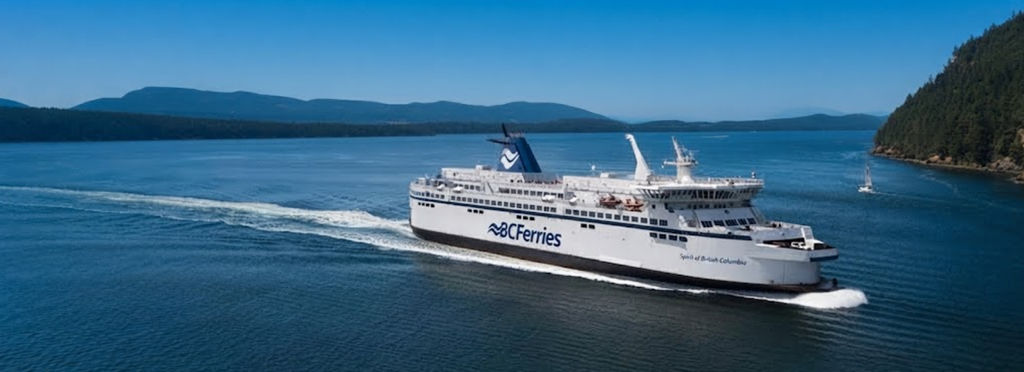
The crossing from Vancouver to Victoria is more than a means of transport; it is a passage through landscapes that feel both timeless and fleeting, a reminder that travel is not only about destinations but about the spaces in between. The ferry ride across the Salish Sea becomes a stage where sky, tide, and forest perform together, and where the rhythm of the voyage slows the pace of modern life into something elemental.
The Shape of the Journey
The Vancouver ferry to Victoria does not begin in Vancouver, nor end in Victoria. The voyage stretches wider than the map suggests. From downtown Vancouver, the road leads south to Tsawwassen, a terminal set against the edge of Delta, British Columbia. The drive itself can take 40 minutes in light traffic, or nearly 90 when the city presses its weight onto the highways.
Travelers are advised to arrive early—45 minutes to an hour before departure—because the ferry waits for no one. From Tsawwassen, the ship sails for 90 minutes across the Salish Sea, threading its way between the Gulf Islands. Arrival is at Swartz Bay, 31 kilometers north of Victoria.
Another drive follows, thirty minutes on a clear road, an hour when congestion builds. The journey, in its entirety, stretches to 3 and a half hours at best, 5 at worst. A day trip is possible, but most of the hours are consumed by transit. The wiser choice is to linger, to spend at least two nights, to let the island breathe its rhythm into the traveler.
The Cost of Passage
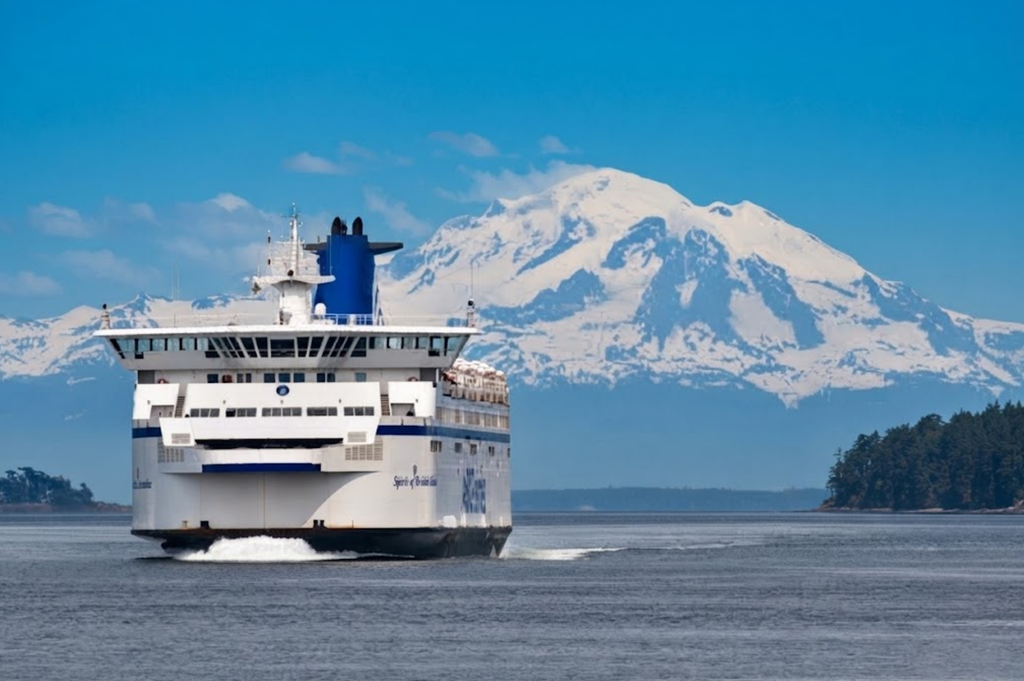
The ferry is not a simple shuttle; it is a vessel large enough to carry more than 350 cars, a floating town that moves with the tides. Prices reflect this scale. The cheapest fare, the “Super Saver,” begins at $49 for one car and driver, available only on select off‑peak sailings—often the first or last of the day.
More commonly, fares range between $80 and $115, depending on the time, the size of the vehicle, and whether reservations are made in advance. Walk‑on passengers pay $20 each, or $15 on Super Saver sailings. Extra passengers in vehicles are charged the same.
For those who gamble on space without reservations, the cost is $95, but the risk of waiting for the next sailing often outweighs the savings. On a typical weekday morning, a small car with two passengers might pay $125. Compared to the short ferry rides of Toronto or Halifax, the price feels steep. Yet this is not a 15 minute hop across a harbor; it is a miniature cruise, a journey through one of Canada’s most beautiful waterways.
Boarding and Onboard Life
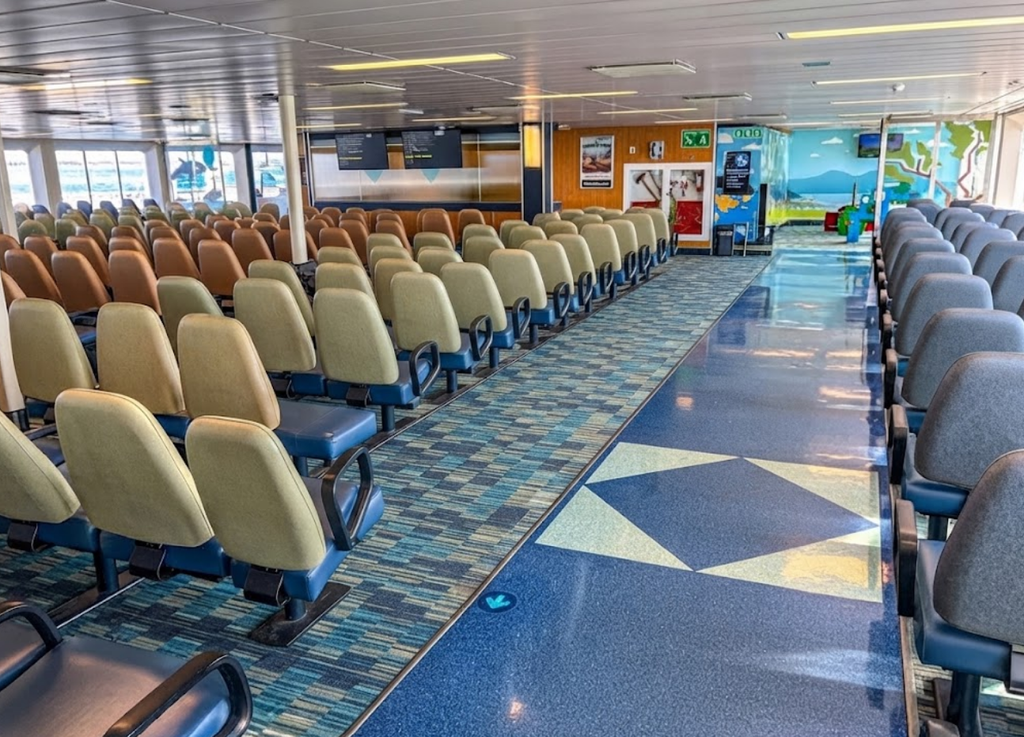
Driving onto the ferry is a surreal experience. Vehicles line up in neat rows, swallowed into the belly of the ship, engines silenced as passengers climb to the decks above. Inside, the ferry resembles a public building more than a boat: wide corridors, cafeterias serving hot meals, vending machines humming with snacks, a gift shop stocked with clothing and souvenirs.
Children race toward play zones, pets are guided into designated areas, and travelers with laptops search for quiet corners to work. Wi‑Fi is advertised but unreliable; staff in the gift shop admit that connections often fail. Most passengers are locals, accustomed to the crossing, their expressions calm and unexcited.
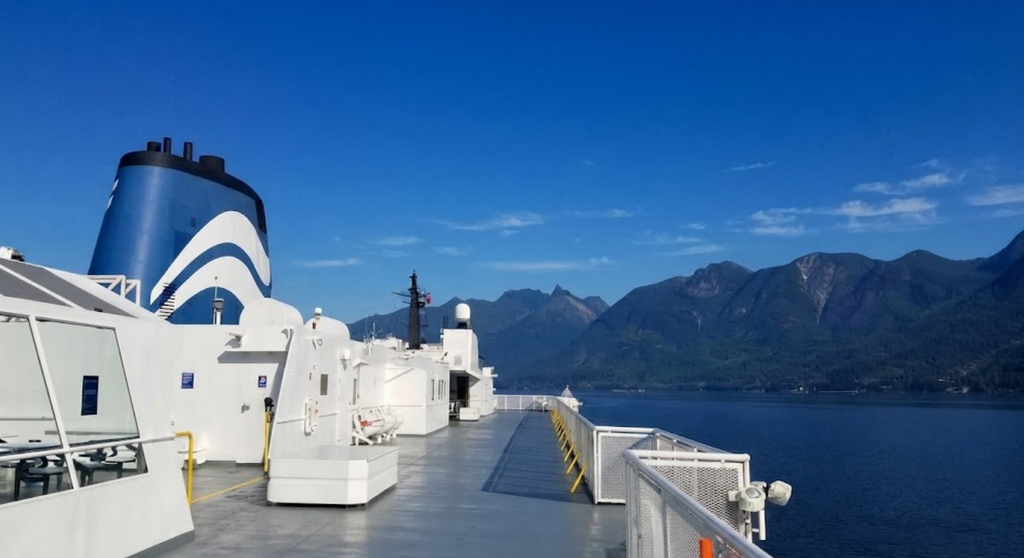
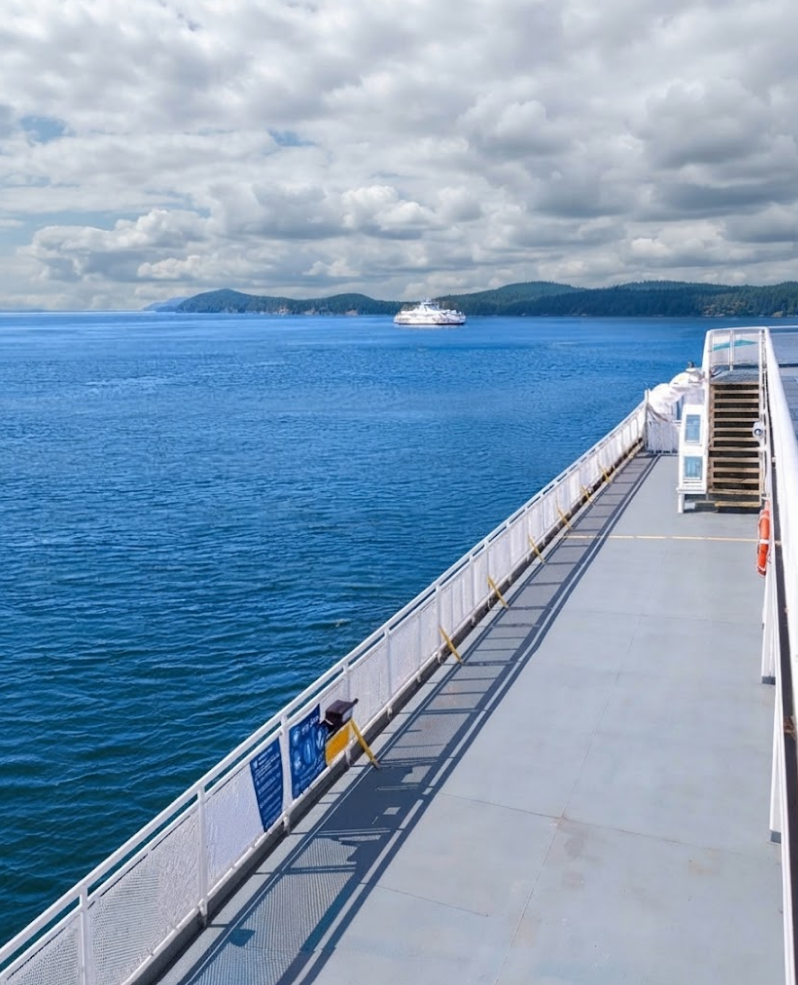
For them, the ferry is routine. For newcomers, it is spectacle. Seats near the panoramic windows fill quickly, but the true magic lies outside. The “Sun Deck,” optimistically named in a province known for rain, offers open air and sweeping views. The wind carries salt and pine, the horizon shifts with every passing island, and the ferry becomes less a vessel than a moving balcony over the Pacific.
The Scenery
The Salish Sea stretches wide, its surface often calm, glassy, reflecting clouds and sky in silver tones. The ferry glides through narrow channels, weaving between the Gulf Islands. Rocky shorelines rise from the water, sandstone cliffs carved by centuries of tide, forests pressing green against the horizon.
Lighthouses punctuate the journey, their red‑and‑white towers standing as guardians of history. Georgina Point Lighthouse, dating back to the late 1800s, flashes its presence as the ferry passes. Wildlife is rumored to appear—whales, orcas, sea lions—but sightings are never guaranteed. Even without them, the scenery holds its own.
For West Coast residents, this landscape may feel ordinary, a backdrop to daily life. For visitors, it is extraordinary, a cinematic unfolding of nature. The ferry becomes a moving observatory, each deck a vantage point, each moment a frame in a film of sea and sky.
The Lounge
On the return journey, some passengers choose the Seawest Lounge, a private space that offers quiet and comfort. For $14, entry includes unlimited coffee and tea, along with newspapers and magazines. The true value lies in the silence. Children are absent, voices are hushed, and attendants enforce calm with gentle reminders.
The lounge is not luxurious, but it is peaceful. Power outlets are scarce, a frustration for those whose phones drain from constant photography. Yet the atmosphere compensates. For travelers seeking refuge from noise, the lounge is worth the fee. On stormy days, it becomes sanctuary.
The Rhythm of Travel
The ferry is punctual, reliable, and comfortable. Wi‑Fi unreliable, but the essentials are met. The journey is not about luxury; it is about rhythm. The act of boarding, sailing, disembarking, and driving becomes a ritual, a cadence that shapes the day. Reservations are recommended, especially on weekends and holidays, when sailings sell out.
Arriving early ensures smooth boarding. Layers of clothing are essential, for the decks invite exploration regardless of weather. The ferry is not simply transport; it is part of the story of visiting Victoria. The voyage itself becomes memory, a chapter in the narrative of travel.
The Spirit of the Crossing
The Vancouver to Victoria ferry embodies the spirit of British Columbia: landscapes vast and untamed, journeys that demand patience, beauty that rewards those who linger. The crossing is not efficient, not direct, but it is unforgettable. The Salish Sea, the Gulf Islands, the sandstone cliffs, the forests leaning into the tide—all combine to create a passage that feels both ordinary and extraordinary. The ferry is a bridge between city and island, between routine and adventure.
Extended Reflections
Travelers often underestimate the time required, imagining Victoria as a quick hop from Vancouver. The reality reshapes expectations. The journey is long, but the length is part of its charm. The ferry slows the pace, forces attention to the landscape, and transforms transit into experience.
The cost may surprise, but it reflects the scale of the vessel and the beauty of the route. The lounge may seem unnecessary, but for those seeking quiet, it becomes haven. The scenery may feel ordinary to locals, but to visitors, it is extraordinary. The ferry is not perfect— Wi‑Fi could be more reliable, routes more direct—but it delivers what matters: comfort, punctuality, and beauty.
The Victoria ferries from Vancouver is more than a boat ride. It is a passage through landscapes that define the West Coast, a journey that transforms transit into memory. Reserve ahead. Arrive early. Bring layers. Step outside, breathe the salt air, watch the islands slide past. Let the journey be part of the adventure. Victoria awaits, but the ferry itself is worth the voyage.