
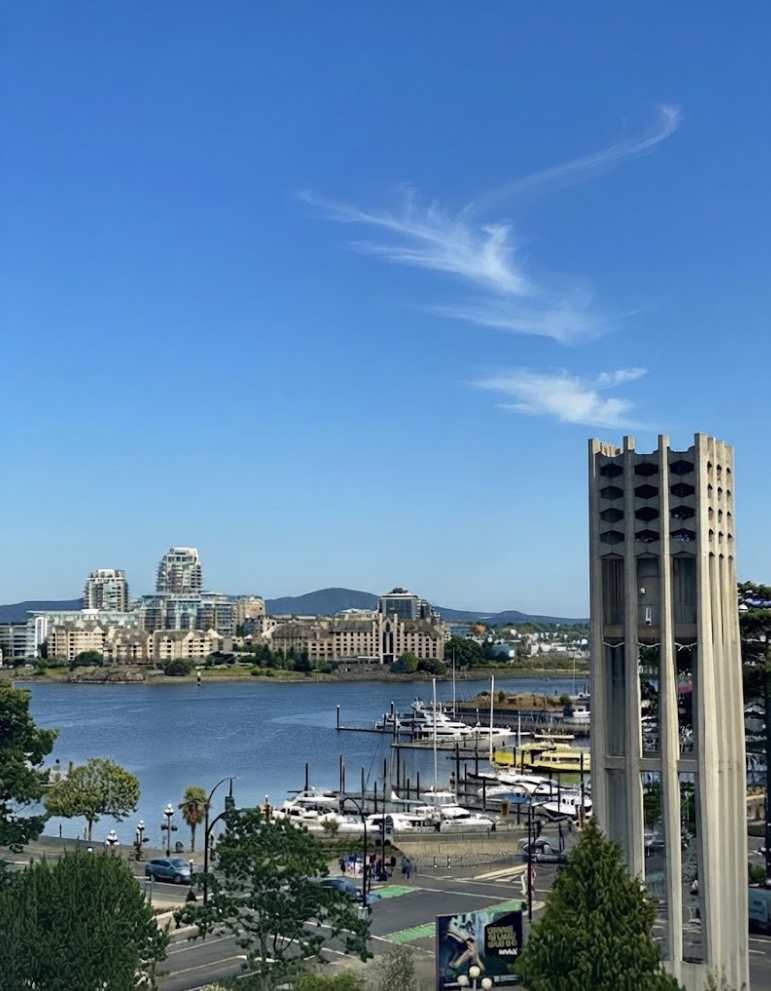
Victoria’s Inner Harbour is the city’s front porch, a sweep of water framed by heritage stone and ivy‑clad walls, where seaplanes skim the surface and ferries slide in from the horizon. It is the place every visit begins, and the place every walk seems to return to. To write about it is to write about Victoria itself, because the harbour is not just a view — it is the rhythm of the city, looping back into every day.
A Harbour Built on History
Long before the hotels and parliament domes, the Songhees and Esquimalt Peoples gathered here, the shoreline alive with stories, trade, and ceremony. The water was a meeting place, a source of food, and a spiritual centre. When the Hudson’s Bay Company arrived in the 1840s, Fort Victoria rose on the edge of the harbour, and the waterfront became the economic heart of the settlement.
Ships carried furs, timber, and supplies, and the harbour grew into a maritime gateway. The gold rush of the 1850s brought thousands through its docks, and the Inner Harbour became a staging ground for fortune seekers heading north. Markets spilled onto the streets, Chinatown took root nearby, and government buildings rose to anchor the colony.
By the late 1800s, the waterfront was layered with commerce, politics, and culture. Many of the buildings that frame the harbour today date back to this era, their façades carrying the weight of history.
The Empress and the Causeway
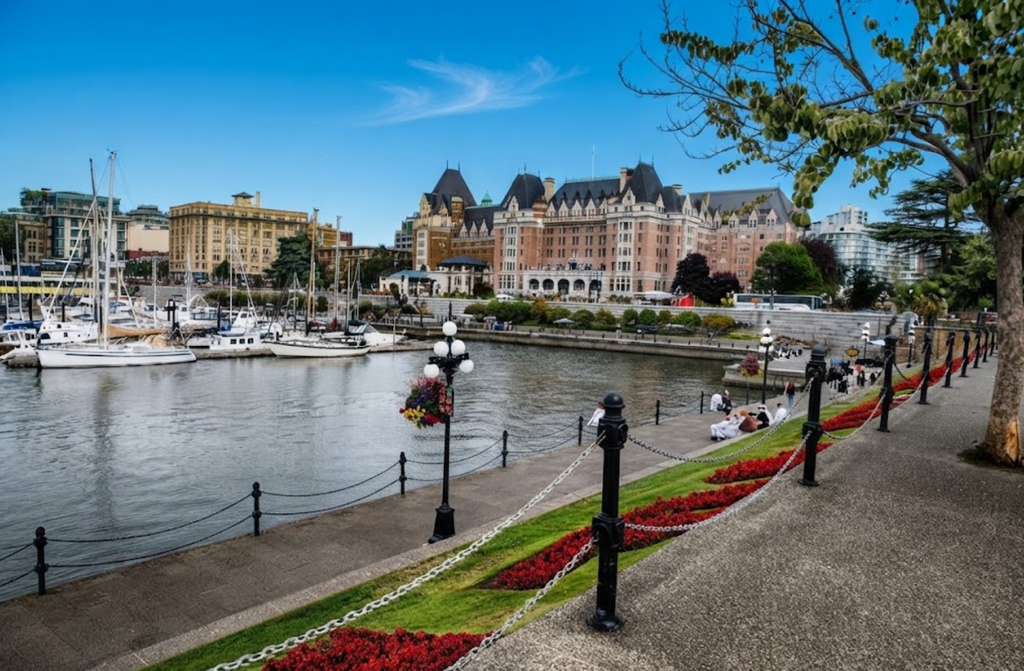
The Fairmont Empress stands like a grand old guardian above the water, its ivy‑clad walls watching the causeway below. Built in 1908, it was designed to welcome tourists arriving by steamship, and it remains one of Canada’s most iconic hotels. Its presence is more than architectural; it is symbolic of Victoria’s early embrace of tourism, a city that understood its beauty was its greatest currency.
Below the Empress, the causeway curves along the water, a lower walkway a few steps down from street level but a world apart. In summer, it fills with buskers, artists, and market stalls, the air alive with music and chatter. Tour boats dock along its edge. The causeway is the city’s theatre, where daily life plays out against a backdrop of history and water.
Government Street and Old Town
At the top of the causeway, Government Street runs north through downtown, one of the oldest commercial streets in western Canada. Its heritage façades hold souvenir shops, independent boutiques, and cafés, each spilling onto the street with colour and character.
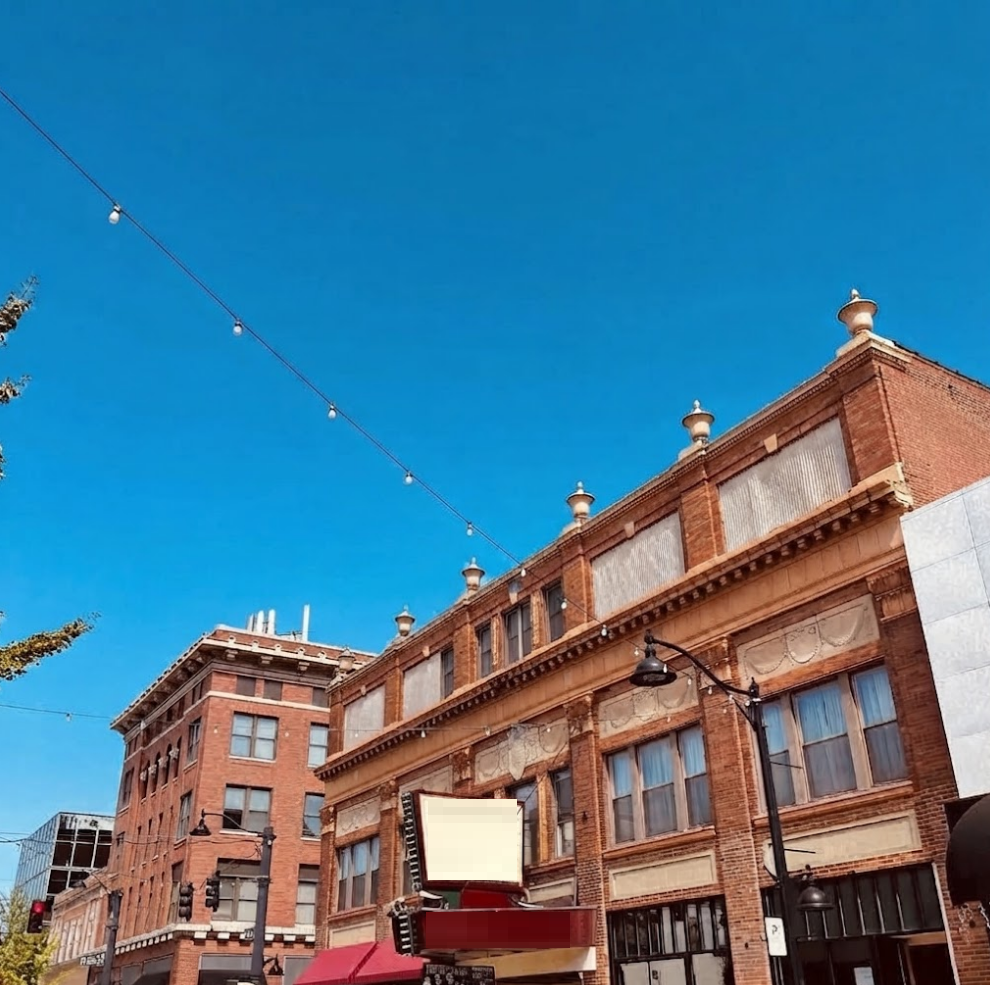
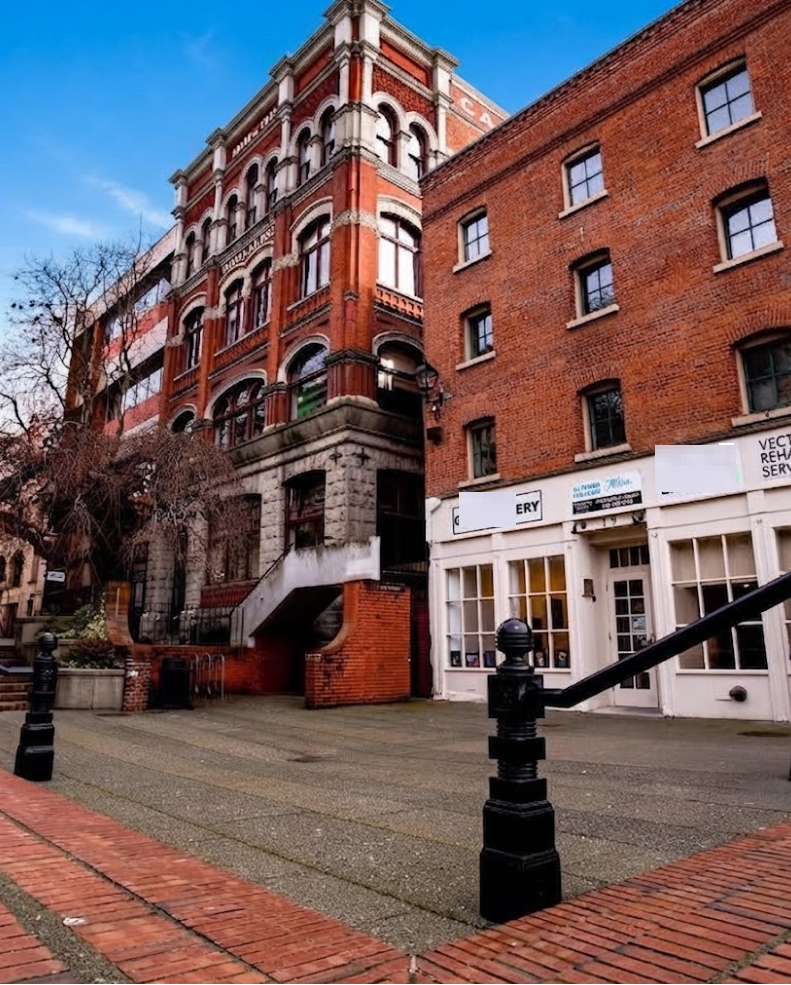
Walking north, the street leads into Old Town, where brick warehouses and narrow alleys recall Victoria’s past as a trading hub. Wharf Street runs parallel along the water, quieter and more reflective. It leads to Bastion Square, once the site of Fort Victoria’s palisades, now a plaza filled with restaurants and markets. Together, Government and Wharf Streets form the spine of downtown, connecting the harbour to the city’s living heart.
Royal BC Museum and Thunderbird Park
One block back from the causeway, the Royal BC Museum holds the province’s Indigenous and natural history collections. Its galleries have shifted in recent years, reflecting evolving understandings of culture and heritage, so visitors are wise to check what is currently open before buying a ticket.
Beside the museum, Thunderbird Park offers an outdoor collection of totem poles, historic houses, and a First Nations Big House. It costs nothing to walk through, and even ten minutes here offers a glimpse into the artistry and traditions of the Coast Salish Peoples. The park is a reminder that the harbour’s history is not only colonial but deeply Indigenous, layered with stories that predate the city by centuries.
Ship Point and the Markets
On the Wharf Street side of the harbour, Ship Point opens as a plaza facing the water. In summer, it hosts markets, live music, and festivals, the air filled with food stalls and laughter. When nothing is scheduled, it is simply a wide open space with benches, perfect for watching the boats.
The lit‑up Canada sign stands here, a favourite photo spot with the harbour as backdrop. Ship Point is both stage and sanctuary, a place where the city gathers and a place where one can sit quietly, watching the tide of traffic move across the water.
Whale Watching and Harbour Ferries
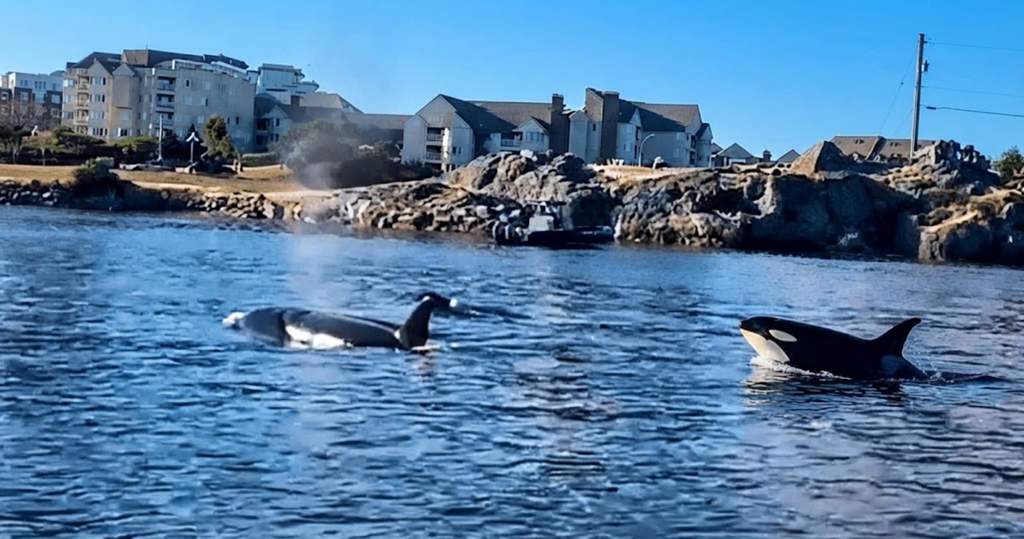
The Inner Harbour is the departure point for whale watching tours, boats leaving from docks along Wharf Street and the causeway. From March through October, they head into the strait, searching for orcas, humpbacks, sea lions, and seals. Orca sightings peak in July and August, and many tours carry naturalists on board, turning the trip into both adventure and education.
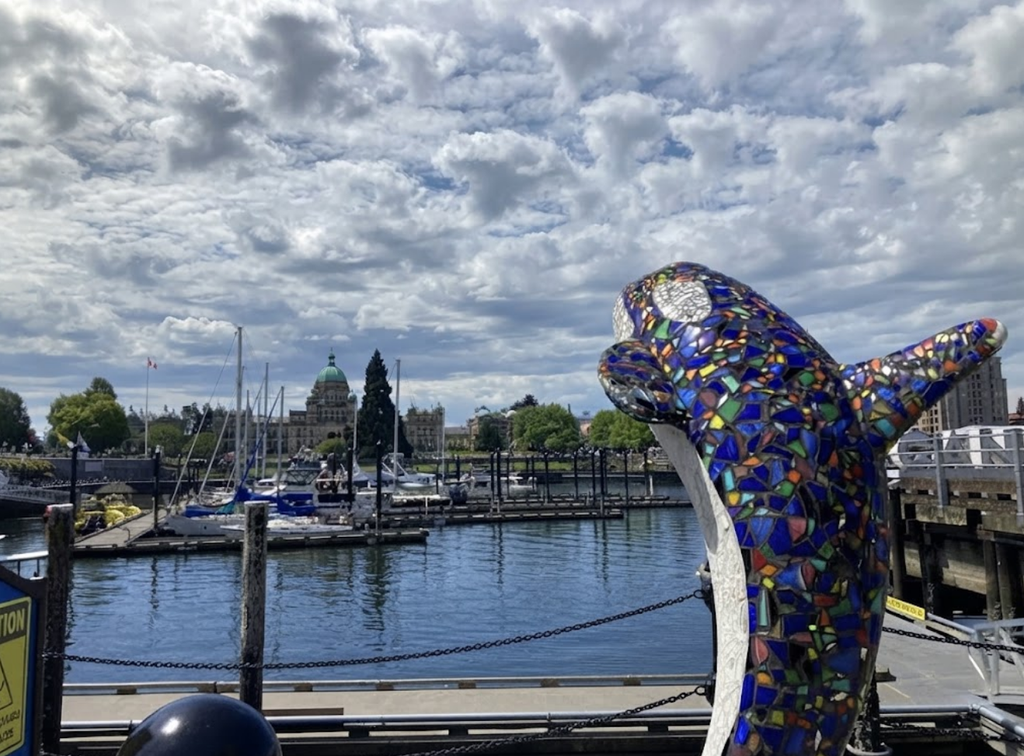
Harbour ferries and water taxis weave through the Inner Harbour, small passenger boats connecting Chinatown, Fisherman’s Wharf, and Songhees Point. They are genuine transport, but the skippers often keep up a running commentary, so a short crossing becomes an informal tour. Hopping across to Fisherman’s Wharf and walking back is a good hour, a loop that ties the harbour to the neighbourhoods beyond.
Seaplanes and Ferries
Victoria Harbour is a certified water airport, with up to 100 flights a day recorded by Transport Canada. Floatplanes taxi past the Empress, line up, and lift off between boat traffic, their white strobes flashing on navigation beacons to signal takeoffs and landings.
The Vancouver flight takes roughly 35 minutes gate to gate, a reminder of how connected Victoria is to the mainland. Two passenger ferries cross from Washington State directly into the Inner Harbour. The Victoria Clipper runs from Seattle, carrying foot passengers only, while the MV Coho sails from Port Angeles with vehicles as well as passengers.
Both dock at the Belleville Street terminal, a two‑minute walk from the causeway. The Clipper is the faster option for day trips, while the Coho is the choice for those driving the Olympic Peninsula.
A Harbour Meant to Be Walked
What makes the Inner Harbour special is not just its scenery but its walkability. The David Foster Harbour Pathway threads past Old Town, Fisherman’s Wharf, and Laurel Point, each turn revealing another view — a floatplane lifting off, a totem pole standing tall, a café tucked into the corner.
Along the way, historic markers and modern Indigenous artwork remind walkers that this is both past and present, layered into the city’s daily rhythm. It is one of Canada’s finest urban waterfront walks, a place where history and life meet at the water’s edge.
Best Times to Explore
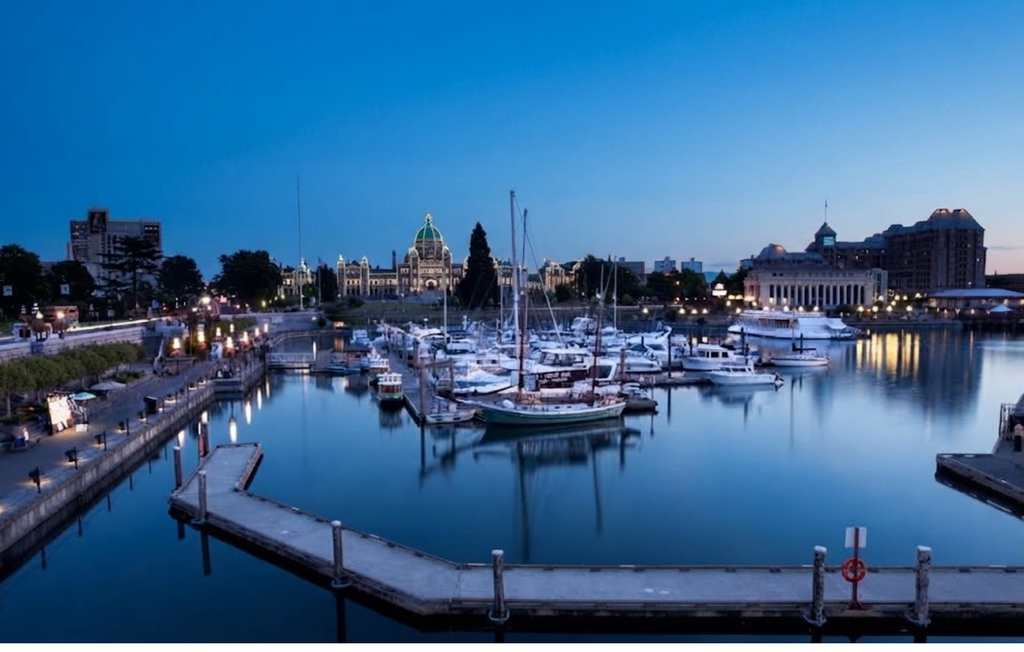
Morning brings calm water and golden light, the city waking slowly. Late afternoon warms the colours, the streets busier, perfect for people watching. Evenings light the Parliament Buildings and the Empress, casting reflections across the harbour.
Winter, often overlooked, offers peaceful walks with festive lights and fewer crowds, December evenings that feel almost secret.Each season carries its own rhythm, and the harbour reflects them all.
The Harbour’s Rhythm
Markets at Ship Point, whale‑watching boats slipping out toward the strait, ferries docking at Belleville Street, harbour taxis weaving between them all. Seals pop up between the boats, buskers play along the causeway, and the Parliament Buildings glow against the night.
The Inner Harbour is postcard‑perfect, yes, but it is also lived‑in — a place where locals bring visiting family, where daily life loops back to the water. It is the centre of the city, the loop that ties every day together. Walk it, linger on its benches, watch the planes rise and the ferries dock — and then step into the streets behind it, where the city breathes beyond the postcard.