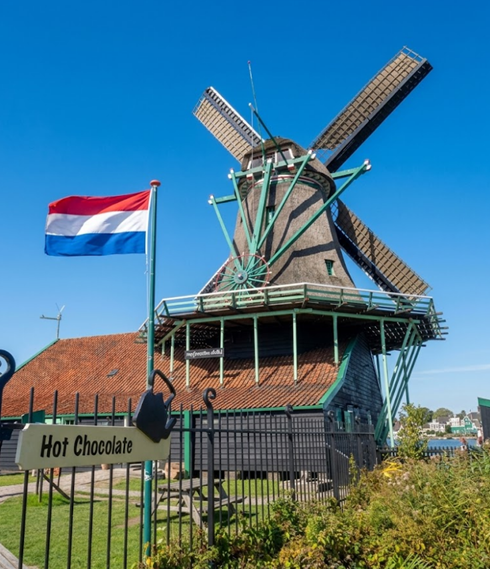
There are places in the world where history feels like a museum exhibit, carefully curated behind glass, and then there are places where history is still alive — woven into the rhythm of daily life. The Zaanse Schans, a riverside village just twenty minutes north of Amsterdam, belongs firmly to the latter.
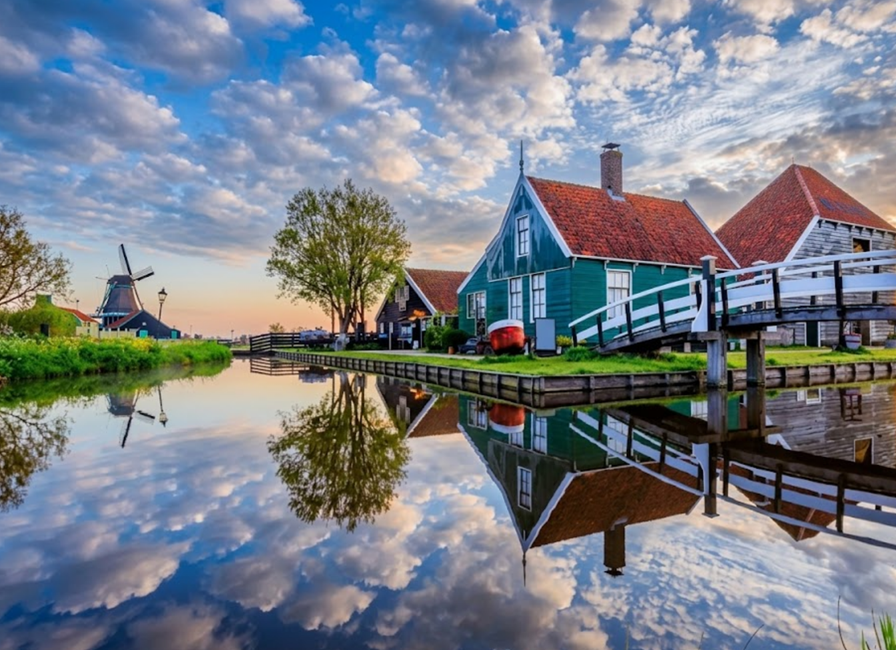
Here, the sails of windmills still turn against the Dutch sky, timber houses painted in deep green line the water’s edge, and crafts that once fueled the Golden Age of Holland are practiced as if time never moved forward. Walking into the Zaanse Schans is like stepping into a painting.
The air smells faintly of wood shavings and spices, the sound of creaking mill machinery drifts across the river, and the sight of sails catching the wind feels almost theatrical. Yet this is no stage. It is a living neighborhood, a place where residents still occupy the houses, where shopkeepers dress in traditional costumes, and where artisans demonstrate trades that once made this region the beating heart of Dutch commerce.
A Village Without Gates
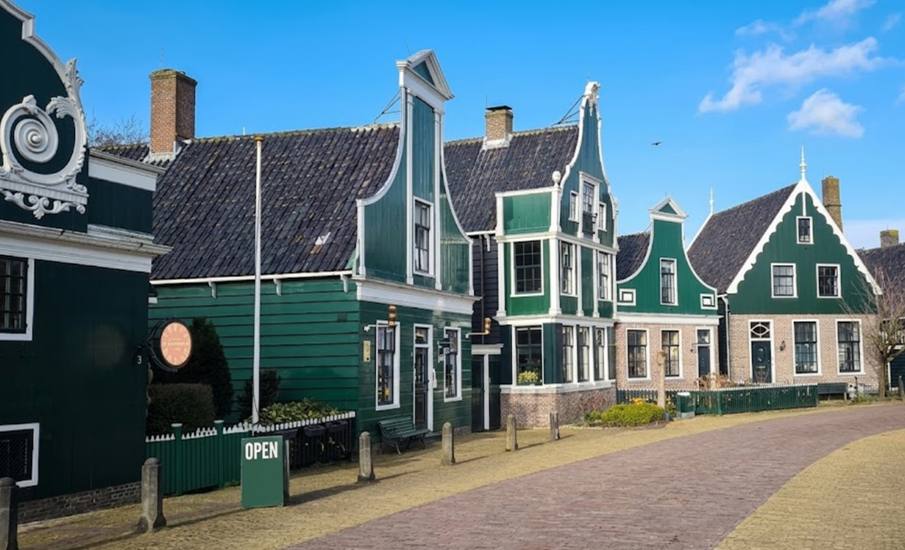
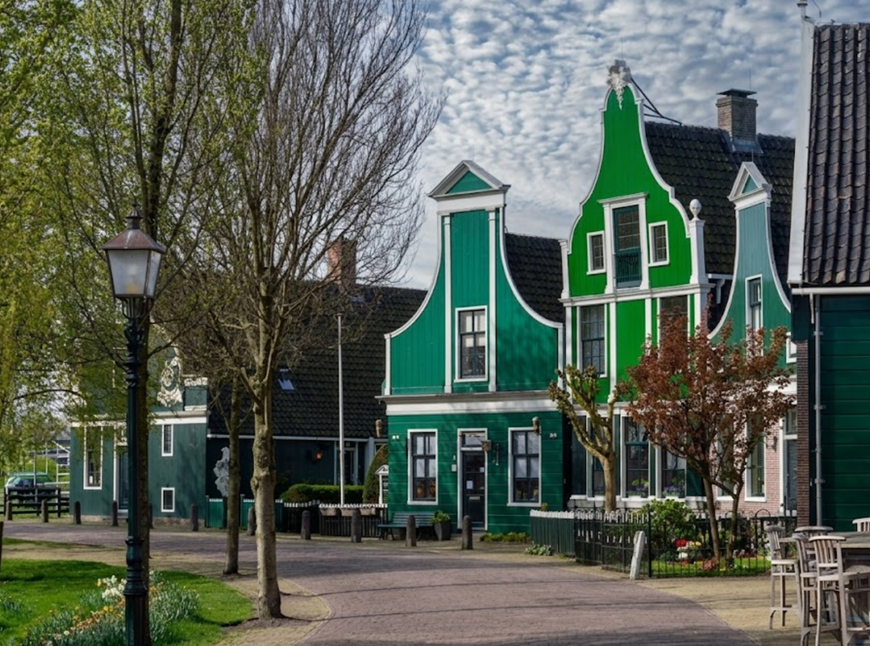
One of the most remarkable things about the Zaanse Schans is that it is not a theme park or an outdoor museum. It is a public area, open 365 days a year, free of charge. You don’t need a ticket to wander its lanes, cross its bridges, or admire its houses. The timber façades, built in the authentic Zaan style of the 17th and 18th centuries, are mostly private homes, and visitors are asked to respect the residents’ privacy.
You cannot step inside, but you can admire them from a distance, their green-painted walls and white trim standing as icons of Dutch heritage. The freedom of entry makes the Schans feel welcoming, but it also creates challenges. With more than 2.6 million visitors last year — a staggering number for a village with only a hundred residents — the balance between tourism and community life has become delicate.
Locals have spoken of visitors wandering into gardens, knocking on doors, even peering through windows with selfie sticks. The council has announced that from next spring, every visitor from outside the area will pay €17.50 to enter. The fee will include admission to the museum and windmills, and the revenue will fund maintenance and new infrastructure.
The Windmills: Holland’s Mighty Engines
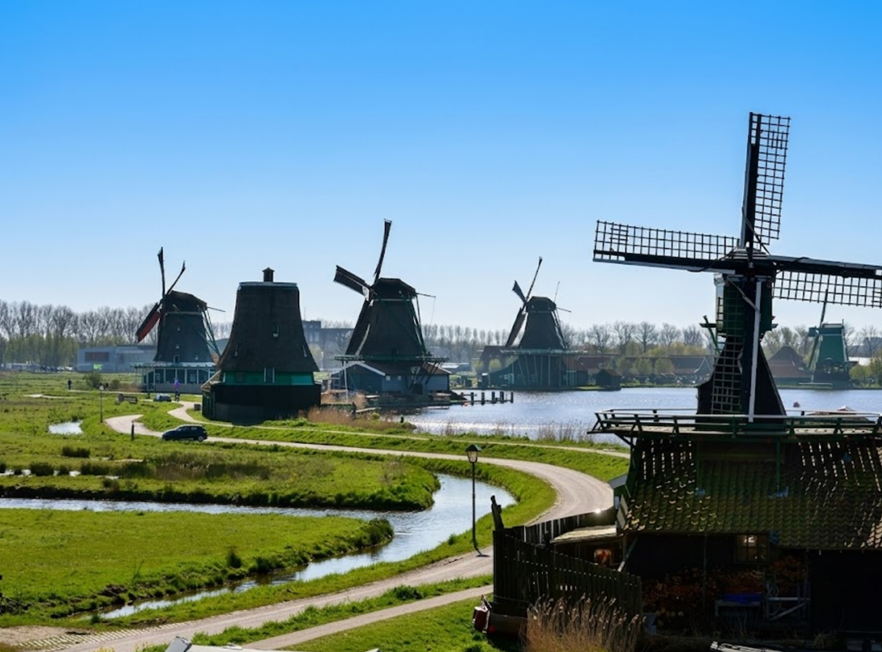
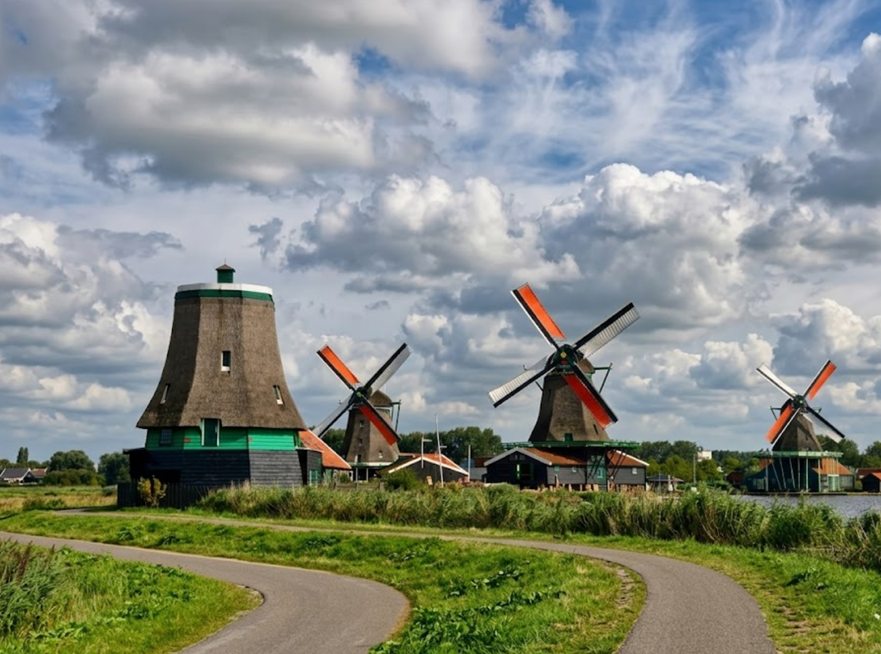
The windmills are the soul of the Zaanse Schans. Their silhouettes rise above the river, sails turning slowly, each one with its own purpose. Step inside, and you are transported to the 17th century. Wooden gears creak, millstones grind, and the rush of sails fills the air.
These mills were not quaint curiosities but engines of industry, powering Holland’s rise as a global trading nation. To watch them work today is to glimpse the ingenuity that once made the Dutch masters of commerce. Admission to the mills requires a ticket, but the experience is worth it.
You climb narrow wooden stairs, stand on balconies overlooking the flat expanse of Holland, and feel the wind tugging at your clothes as the sails sweep past. It is a visceral reminder that wind, not steam or electricity, once drove the world.
Museums and Crafts: Living Heritage
Beyond the mills, the Zaanse Schans offers a tapestry of museums and craft centers. The Zaans Museum is the anchor, housing treasures that tell the story of the region. Among its highlights is a 18th century painting of the local windmills that captured their beauty in impressionist strokes.
The Weaver’s House lets you step into the world of looms, crawl behind the machinery, and imagine life in a time when weaving was both livelihood and art. The Cooperage demonstrates the craft of barrel-making, essential for storing and transporting goods.
The Museum Zaanse Tijd explores the history of Dutch clockmaking, while the Heritage Chambres Kalverringdijk offers a glimpse into traditional interiors. Many of these museums and craft centers are free to enter, while others require a ticket. The Zaanse Schans Card provides access to seven museums and crafts, two mills of your choice, and a digital audio tour, making it a convenient way to explore.
Shops : Commerce in Costume
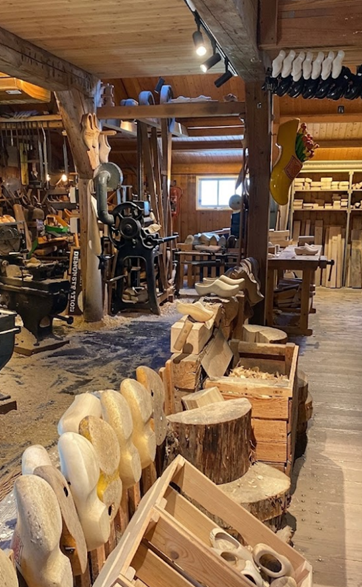
The shops of the Zaanse Schans are attractions in themselves. In the clog workshop, artisans carve wooden shoes, shavings curling to the floor as the familiar shape emerges. The antique shop, dating back to 1623, feels like a relic of another century, its shelves lined with treasures that whisper of history. Eleven shops and seven craft centers welcome visitors without charge, making the village feel alive with commerce and culture.
Practical Realities
Visiting the Zaanse Schans requires a few practical considerations. Parking costs €15 per day for passenger cars, payable only by debit or credit card. Coaches are charged between €35 and €55 depending on the season. Restrooms are available at the main entrance and near the dike, €1 per use, with facilities for disabled visitors.
The paths and bridges, built centuries ago, are not always wheelchair-friendly, but disabled parking and restrooms are available, and wheelchairs can be reserved at the Zaans Museum. The village is open daily from 9:00 to 17:00, closed only on 25 December and 1 January.
The Challenge of Tourism
The popularity of the Zaanse Schans has become both blessing and burden. With millions of visitors each year, the village has become one of the most visited sites in the Netherlands. Yet the influx strains the community. Residents speak of lost privacy, of tourists wandering into homes, of gardens treated as public spaces.
The council’s decision to introduce an entrance fee is controversial. Shopkeepers worry that families will spend their budget on entry and parking, leaving little for clogs or gifts. People won’t have a lot of budget over for other stuff. Yet the fee may be necessary to preserve the village.
The revenue, estimated at €24.5 million annually if visitor numbers halve, will fund maintenance of the windmills and new infrastructure, including toilets. It is a delicate balance between heritage and commerce, between preservation and accessibility.
A Multilingual Chorus
To walk through the Zaanse Schans is to hear a chorus of languages. At the little bridge over the canal, visitors queue politely for the perfect windmill photo. Chinese, English, Spanish, Arabic, Italian, Russian — all mingle in the air. The sails turn slowly, and cameras click in unison.
The scene is both charming and overwhelming. The windmills are still a long way off, but the desire for the perfect shot draws people together. It is a reminder that heritage is not just local but global, that the beauty of the Zaanse Schans belongs to the world.
A Living Paradox
The Zaanse Schans is a paradox: a residential neighborhood, a heritage site, a tourist magnet, and a living museum all at once. It is crowded, yes, but also unforgettable. To walk here is to step into Holland’s past, to see how wind and wood shaped a nation, and to feel the quiet persistence of a community determined to preserve its story.
It is not about ticking off another Dutch attraction. It is about standing in the shadow of windmills, hearing the hum of looms, smelling fresh-cut wood, and realizing that history here is not locked behind glass — it is alive, turning with the wind.