The Australian National Maritime Museum: Sydney’s Harbour of Stories
- Australian National Maritime Museum, 2, Murray Street, Sydney, Sydney CBD, Sydney, New South Wales, 2009, Australia
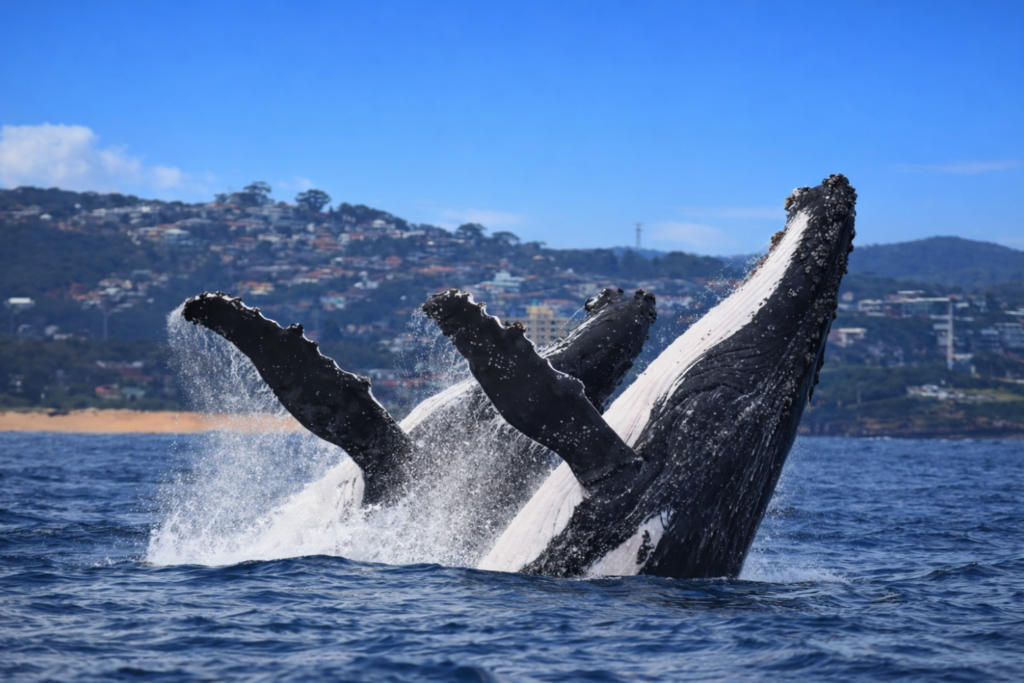
Sydney wears winter lightly. The days are crisp, the skies often startlingly blue, and the ocean, though cooler, becomes a stage for one of nature’s most extraordinary performances. Each year, from May to November, more than 40,000 humpback whales migrate along the New South Wales coastline, transforming Sydney into one of the best whale-watching destinations in the world.
To watch them is to stand at the edge of a continent and witness a timeless journey — a pilgrimage that stretches 3,500 kilometres from the icy waters of Antarctica to the warm tropics of the Great Barrier Reef. Sydney, with its cliff-top walks, harbour cruises, and sweeping headlands, offers front-row seats to this spectacle.
The Season of Giants
The migration begins in mid-May, when the first humpbacks appear on the horizon, heading north to breed in warmer waters. By late June and early July, the ocean feels alive with movement. Pods breach and tail-slap, their colossal bodies rising from the sea in displays of power and play.
October and November bring a gentler rhythm. Mothers and calves drift southward, hugging the shoreline as they return to Antarctic waters. These slower journeys are often the most moving, as tiny flukes rise beside their towering parents.
Alongside humpbacks, southern right whales, orcas, minkes, blue whales, and playful dolphins sometimes join the parade, adding variety to the migration highway. Sydney’s whale season is not just a calendar event — it’s a reminder that the city is stitched into the fabric of the Pacific.
Vantage Points Along the Coast
Sydney’s coastline is a natural amphitheatre, with headlands and cliff walks offering panoramic views of the migration.
Cape Solander in Kamay Botany Bay National Park is the city’s crown jewel. A covered viewing platform, information boards, and accessible parking make it one of the most reliable spots to see whales. On peak days, sightings are virtually guaranteed.
Bondi to Coogee Walk offers cliff-top drama, where whales breach against the backdrop of surfers and sandstone cliffs. The Federation Cliff Walk from Dover Heights to Watsons Bay is equally spectacular, with sweeping views of the Pacific.
North Head at Manly, reached via the Fairfax Walk, is another favourite, where the horizon often erupts with sprays of saltwater.
Further north, Barrenjoey Lighthouse at Palm Beach and Bangally Head at Avalon Beach provide sweeping views of the migration highway.
To the south, the Royal National Park offers endless lookouts along the Coast Track, from Bundeena to Otford. The Curra Moors Loop Track and Governor Game Lookout are perfect for those who prefer shorter walks.
Even within Sydney Harbour, whales sometimes surprise locals, surfacing near ferries and fishing boats — a reminder that the city’s waters are part of their ancient route.
Cruises Into the Blue
For those who want to leave the land behind, whale-watching cruises depart daily from Circular Quay, Darling Harbour, and Manly. Companies like Whale Watching Sydney, Oz Whale Watching, Ocean Extreme, and Captain Cook Cruises offer purpose-built vessels with sun decks, covered cabins, and expert commentary.
Onboard, the experience is intimate. Dolphins race the bow, seabirds wheel overhead, and suddenly, a humpback breaches metres away, its body suspended in air before crashing back into the sea. Some cruises even promise a Whale Sighting Guarantee — spot a whale or sail again for free.
The journey itself is part of the magic. Departing from Circular Quay, boats glide past the Opera House and Harbour Bridge before heading into the open ocean. The city recedes, and the horizon becomes a canvas for nature’s performance.
Behaviours to Watch
Whales are not shy performers. Their behaviours are as varied as they are spectacular:
Breaching — the full body arcs out of the water, a thunderous splash marking its return.
Tail slapping — flukes lifted high, then slammed against the surface.
Spy-hopping — heads rising vertically, eyes just above the waterline.
Blowing — plumes of air and vapour, visible from kilometres away.
Each gesture feels like a conversation between ocean and sky, a reminder that these creatures are not just passing through — they are interacting with the world around them.
Preparing for the Pilgrimage
Whale season coincides with Sydney’s cooler months, so dress warmly, bring a blanket, and pack binoculars or a camera. A camping chair makes cliffside viewing more comfortable, while sunscreen and sunglasses guard against the winter sun.
Patience is rewarded. Sometimes you wait an hour before a plume appears on the horizon; sometimes the ocean explodes with life within minutes. Either way, the journey is worth it.
The Rhythm of Migration
Sydney’s whale calendar unfolds in distinct phases:
Mid-May to July: Northern migration, mothers-to-be heading for warmer waters.
August: Young males put on high-energy displays, breaching and tail-slapping for dominance.
September to November: Southern return, mothers and calves hugging the shoreline.
Each phase offers a different kind of spectacle, from the raw power of the northern journey to the tender intimacy of the southern return.
A City on the Edge of the Wild
Sydney is rare among global cities. Within minutes of its urban heart, you can stand on a cliff and watch giants pass by. From Ben Buckler at Bondi to Kiama’s Blowhole Point further south, the migration is visible to anyone willing to look east.
Sometimes you see nothing but waves; sometimes, the ocean erupts with life. Either way, the experience is transformative. Whale watching in Sydney is not just about spotting whales. It’s about standing at the edge of a continent, feeling the pulse of the Pacific, and remembering that the wild is never far away.

The Cost of Wonder
While many vantage points are free, cruises offer closer encounters. Tickets generally start around $70 for adults, with discounts for children and families. For the price of a dinner out, you can spend hours in the company of giants, learning from expert guides and witnessing behaviours that few people ever see.
It’s a reminder that Sydney’s greatest treasures are not always found in galleries or restaurants, but in the ocean itself.
The Poetry of the Migration
There is something deeply poetic about whale watching. The migration is ancient, a rhythm older than cities, older than nations. To watch it is to connect with a cycle that has endured for millennia.
Sydney’s coastline becomes a stage, its cliffs and beaches transformed into theatres of the wild. The whales are the performers, but the audience — locals, travellers, families, photographers — are part of the story too. Each gasp of wonder, each cheer at a breach, becomes part of the migration’s soundtrack.
Final Reflections
Sydney’s whale season is more than a tourist attraction. It is a reminder of the city’s place in the world — perched on the edge of the Pacific, connected to rhythms that stretch across oceans.
Whether you stand at Cape Solander with binoculars, hike the cliffs of Bondi, or sail from Circular Quay into the open sea, the experience is unforgettable. The whales are not just passing through; they are inviting us to witness their journey, to remember that the ocean is alive, and that we are part of its story.
There are no reviews yet.