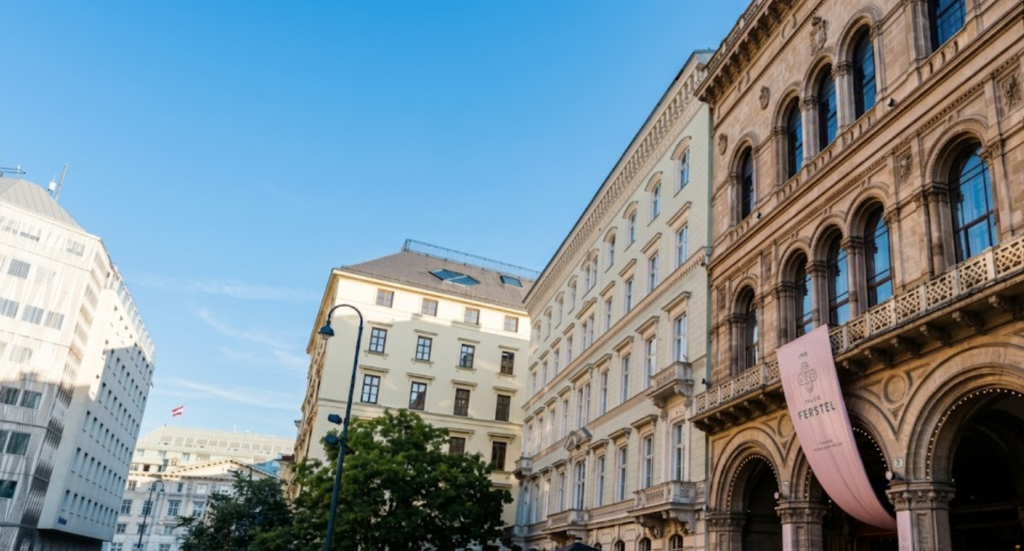
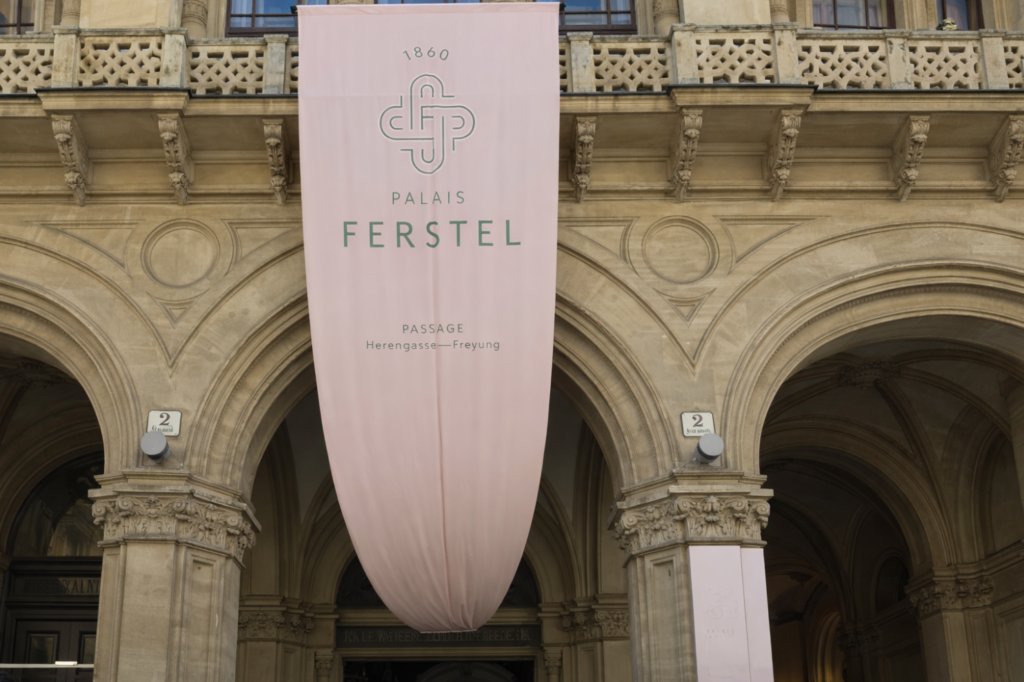
Step into Vienna’s old town and you’ll find yourself drawn toward Café Central, the legendary haunt of poets and politicians. Just beside it lies Ferstel Passage—sometimes called Freyung Passage—a corridor that feels less like a walkway and more like a time machine.
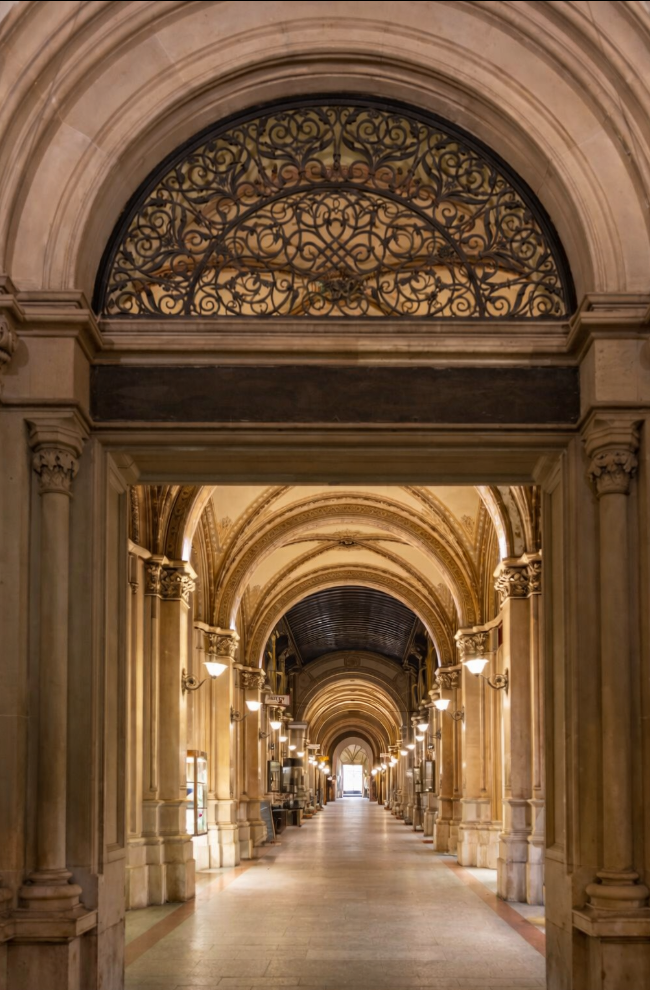
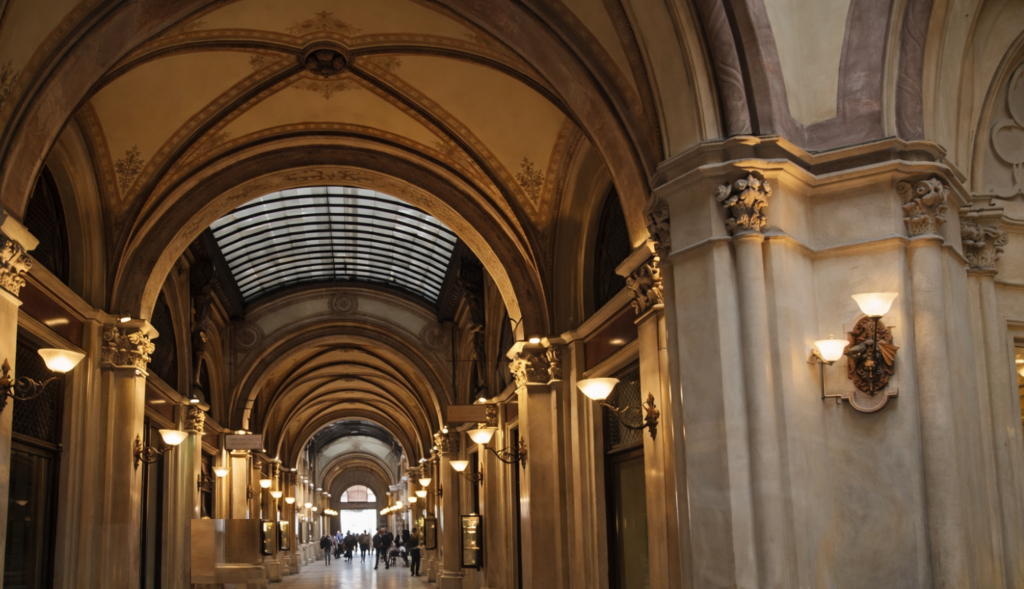
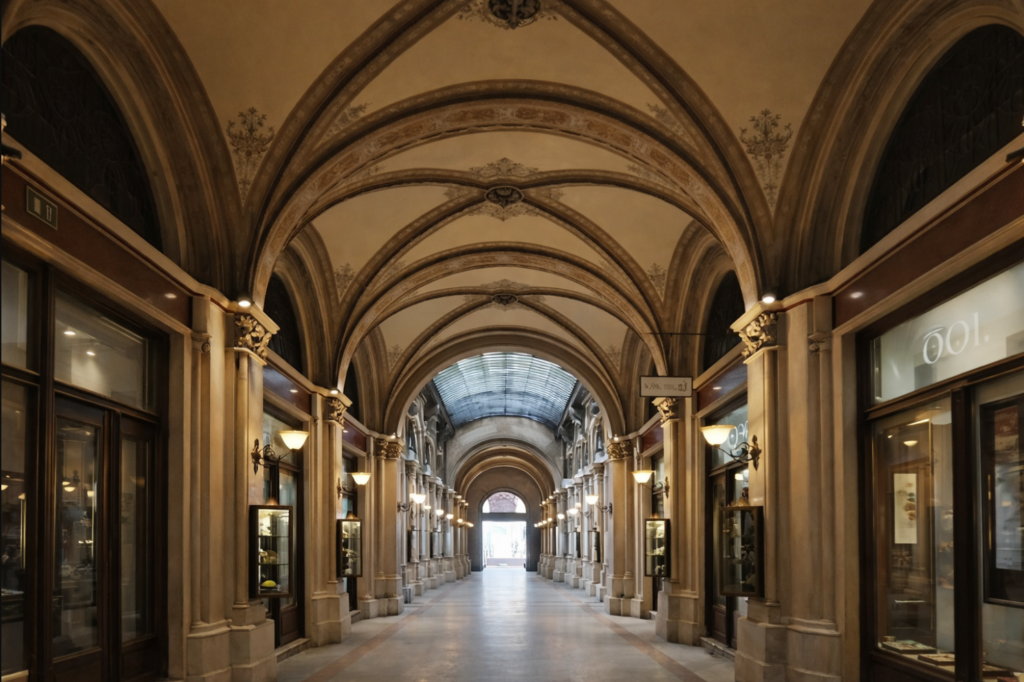
Here, vaulted ceilings stretch high above, their ornate carvings catching the light. Marble arches frame every turn, and the passage culminates in a courtyard crowned by a hexagonal glass dome. At its center rises a six‑meter fountain, where the Donaunixen—a Danube water nymph—stands poised in perpetual motion, her presence anchoring the space in myth and memory.
The Vibes of the Passage
Opening Hours: 10 AM – 8 PM daily, closed Sundays.
Crowds: Expect bustle near Café Central. For quiet, arrive mid‑week mornings.
Atmosphere: A refuge from rain, a stage for window shopping, or simply a place to pause with coffee at Café Couture.
The passage is more than a shortcut between Herrengasse and Freyung square. It is a living salon, where the vibes of conversation mingles with the clink of porcelain cups. Horse‑drawn carriages roll past outside, and with each echo of hooves, the arcade seems to slip further back into the 19th century.
The Architecture
Layout: The building stretches across three streets, but never as a single façade.
Entrances: From Herrengasse and Strauchgasse, the arcade leads ostentatiously onto Freyung square, framed by Palais Hardegg and Palais Harrach.
Style: Gothic‑like vaults, refined cafés, and boutique shops line the tall corridor.
The design is deliberate: a labyrinth of elegance rather than a monolithic block. Each archway invites exploration, each corridor frames a new perspective. The vaulted ceilings rise like palace naves, yet the atmosphere is secular—devoted not to worship, but to the rituals of leisure and commerce.
The Experience
Walking through Ferstel Passage is less about destination than sensation. Pause beneath the dome, watch the light shift across the marble, and listen to the murmur of footsteps. Order a sachertorte, join the line at Café Central, and let the rhythm of the city slow around you.
This is not just architecture—it is atmosphere. A living reminder that Vienna’s old town still breathes in marble and glass, still carries the whispers of its high society, and still offers a stage for anyone willing to step inside and linger.
Vienna is a city that dazzles with imperial grandeur, artistic treasures, and vibrant modern life — but the real experience lies in discovering it for yourself. From wandering cobblestone lanes to marveling at palaces and museums that shaped centuries of culture, every corner offers something unforgettable. If you’re ready to uncover the highlights, hidden gems, and experiences that make this city pulse with energy, dive into our Map Marker below that list things to do in Vienna and let your journey begin.
1010, Innere Stadt, Vienna, Austria
.
Vienna Ringstrasse Review
Butterfly House, Hanuschgasse, Kärntner Viertel, Katastralgemeinde Innere Stadt, Innere Stadt, Vienna, 1010, Austria
.
Vienna Butterfly House Review
Austrian Museum of Applied Arts, 5, Stubenring, Stubenviertel, Katastralgemeinde Innere Stadt, Innere Stadt, Vienna, 1010, Austria
.
MAK Vienna Review
Riesenradplatz, Stuwerviertel, Leopoldstadt, Katastralgemeinde Leopoldstadt, Leopoldstadt, Vienna, 1020, Austria
.
Prater Amusement Park Review
Tiergarten Schönbrunn, 13/B, Maxingstraße, Katastralgemeinde Hietzing, Hietzing, Vienna, 1130, Austria
.
Tiergarten Schonbrunn Review
Natural History Museum Vienna, 7, Burgring, Regierungsviertel, Katastralgemeinde Innere Stadt, Innere Stadt, Vienna, 1010, Austria
.
Naturhistorisches Museum Review
Hofburg Palace, Führichgasse, Kärntner Viertel, Katastralgemeinde Innere Stadt, Innere Stadt, Vienna, 1010, Austria
.
Hofburg Palace Vienna Review
27, Prinz-Eugen-Straße, Katastralgemeinde Landstraße, Landstraße, Vienna, 1030, Austria
.
Vienna Hop on Hop Off Bus Review
Schonbrunn Palace, 47, Schönbrunner Schloßstraße, Katastralgemeinde Schönbrunn, Hietzing, Vienna, 1130, Austria
.
Vienna Schonbrunn Palace Review
Twin City Liner, 2, Franz-Josefs-Kai, Stubenviertel, Katastralgemeinde Innere Stadt, Innere Stadt, Vienna, 1010, Austria
.
Vienna River Cruise Review
4, Strauchgasse, Schottenviertel, Katastralgemeinde Innere Stadt, Innere Stadt, Vienna, 1010, Austria
.
Ferstel Passage Review