
🌳Durable, Sustainable, and Beautiful
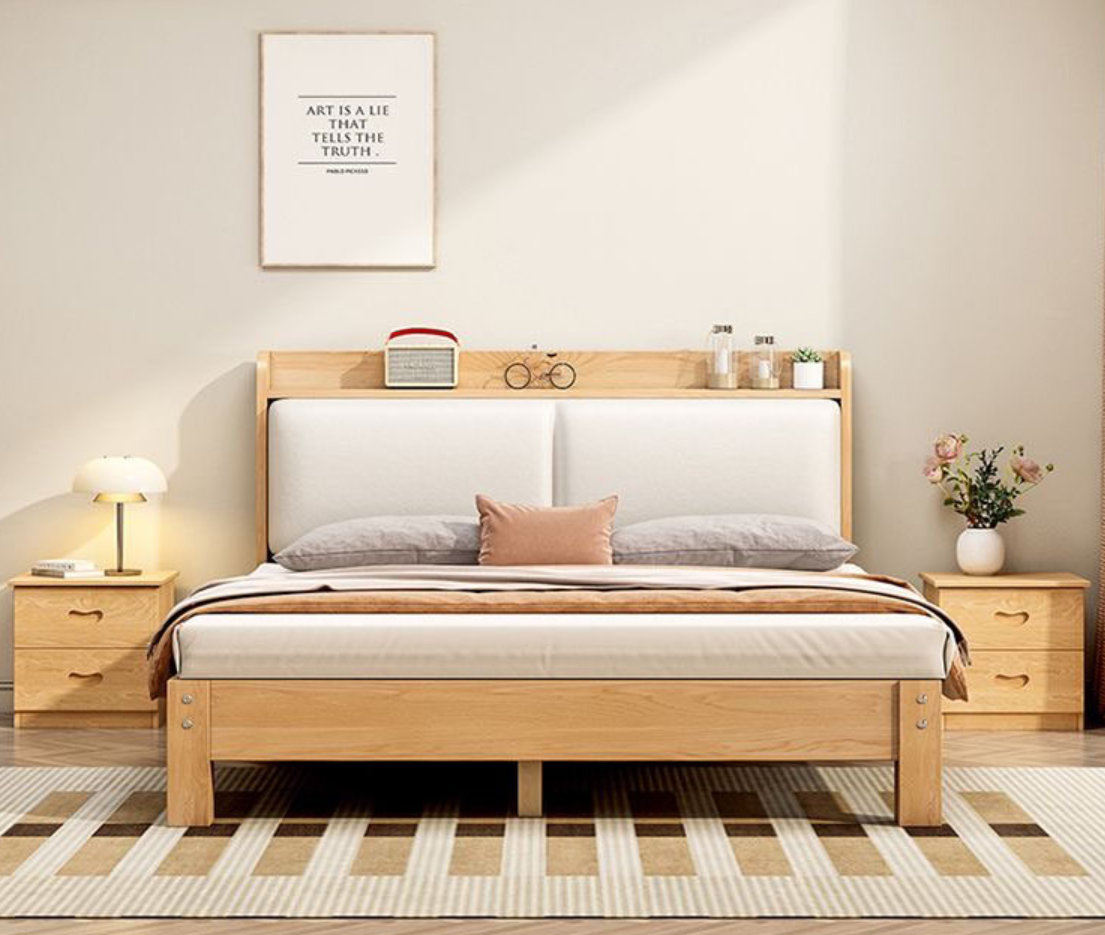
Rubberwood, with its dense grain and minimal shrinkage, has quietly earned its place as one of the most reliable materials for furniture, offering strength and stability while carrying a light-colored, tropical character that feels both natural and contemporary. Despite common misconceptions, rubberwood is not “fake” or engineered like particle board, nor is it MDF, which is heavier and denser; it is real wood, and any furniture crafted from it — from dining tables to rubberwood bed frames — can be considered genuine hardwood furniture.
When you look at larger pieces made from rubberwood, such as desks, dining tables, or bed frames, you may notice parallel lines running across the surface, almost as if multiple pieces have been fused together. This is the result of finger-joint boards, where smaller sections of lumber are interlocked along zig-zag joints and glued into a single, strong slab. Because rubberwood trees are not wide enough to yield large planks, this technique ensures structural integrity, reducing the risk of warping, and is commonly used not only for rubberwood but also for pine and other timbers.
Its durability and aesthetic appeal make rubberwood a favorite for indoor furniture, especially for bed frames, which demand both strength and elegance. The wood’s hardness and straight grain resist cracks and warping, providing a stable foundation that endures years of use. Finished with lacquer, rubberwood furniture gleams with a sleek shine, adding sophistication to bedrooms, dining rooms, and living spaces alike.
Beyond its physical qualities, rubberwood carries an eco-friendly story: it repurposes trees that have already served in latex production, reducing waste and supporting sustainable forestry practices. The dense grain structure makes rubberwood highly resistant to wear and tear, allowing furniture — including bed frames — to last for years, while its cost-effectiveness compared to traditional hardwoods makes high-quality design more accessible.
Its light natural color and smooth grain adapt easily to stains and finishes, fitting seamlessly into contemporary interiors. Rubberwood is typically less expensive among hardwoods because it is a byproduct of rubber harvesting, yet it offers more eco-conscious value by giving new life to trees that would otherwise be discarded. Easy to maintain, requiring only occasional polishing to prevent drying, rubberwood is a material that balances practicality with beauty, sustainability with strength.
It is wood that tells a story — of resilience, of reuse, and of design that endures, whether in the form of a dining table, a desk, or rubberwood bed frames that become the quiet centerpiece of a restful room.





Reviews
There are no reviews yet.