
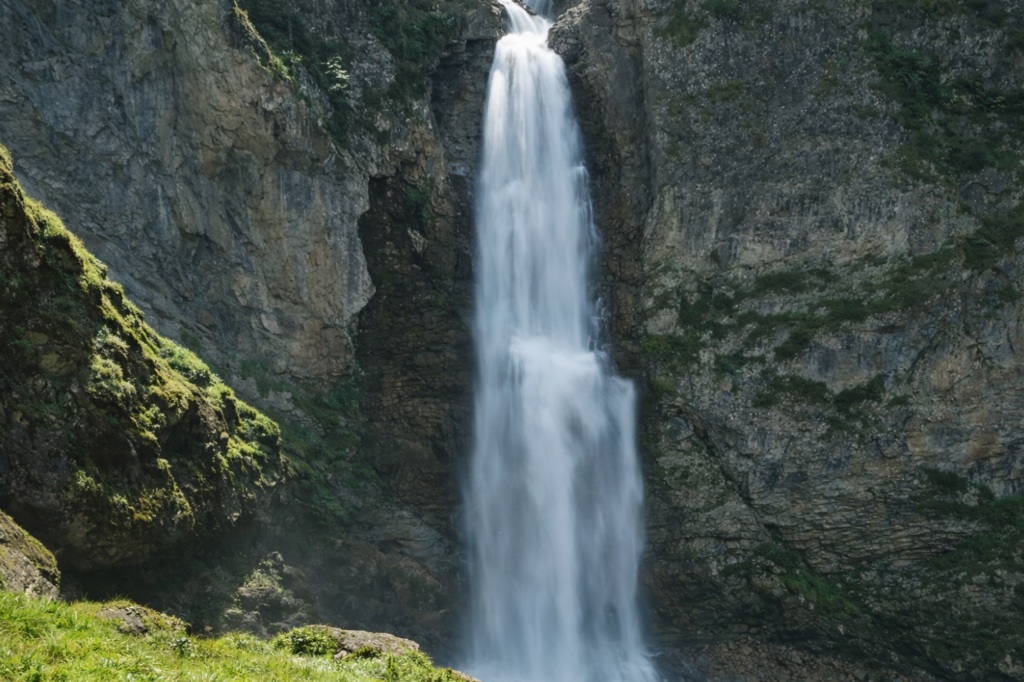
On the shaded side of Heiligenblut, where cliffs rise like guardians over the valley, the Gößnitzfall thunders down in a single, breathtaking plunge. At 70–80 metres high, this waterfall is not just a sight — it’s an encounter with raw alpine power. Legends whisper that a giant once carved the notch into the rock with an axe, but the truth is even more compelling: centuries of water have sculpted this gorge, chiseling stone with relentless force until the Gößnitzbach stream found its dramatic path downward.
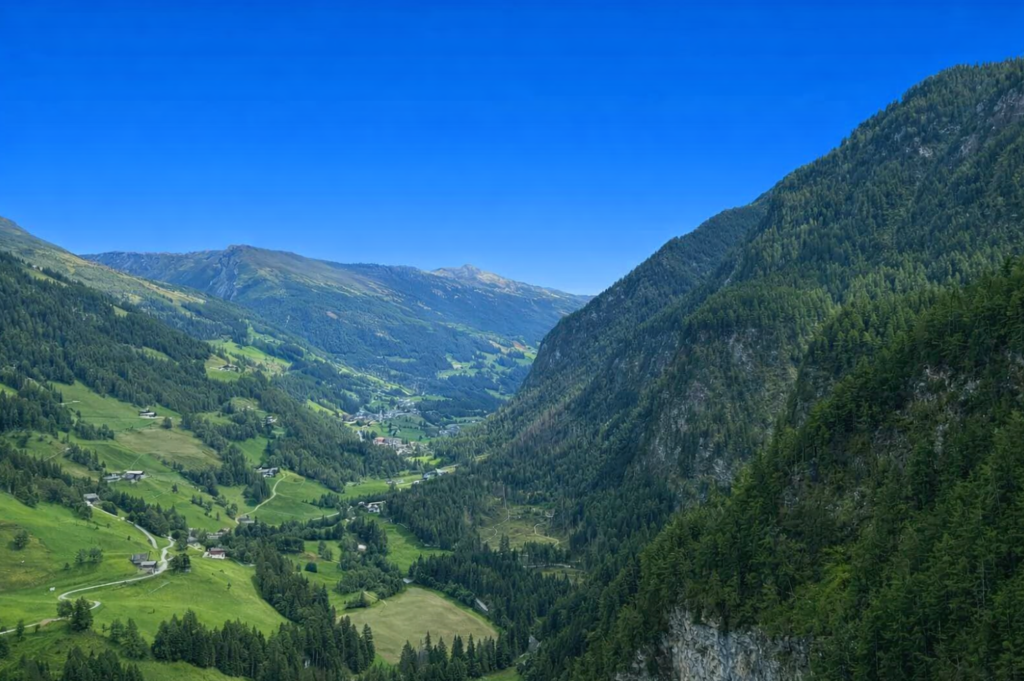
The Journey Along the Natura Mystica Trail
Your adventure begins at the Retschitz car park, marked by a stone spiral and entrance portal. This isn’t just a trailhead — it feels like a threshold into another world. The Natura Mystica trail is a themed path designed to awaken your senses. Moss invites you to touch, water beckons you to listen, and whimsical “Hollaleitisch-creatures” rise from the earth like forest spirits.
The trail winds through alder groves, past boulders that reveal hidden forms when examined with a magnifying glass. Frogs and newts thrive in the Kachlmoor wetlands, a living reminder of why the Hohe Tauern’s fragile ecosystems are protected. Interpretive boards explain the importance of conservation, grounding the beauty in meaning.
Crossing the river, you’ll discover a water mill and the resting spot of Feuerinsel, before following old water pipes and the river’s course to the gorge bridge. Each step feels like a prelude, building anticipation until the roar of the Gößnitzfall grows louder, pulling you forward.
The Waterfall Experience
Arriving at the Gößnitzfall is a sensory immersion. Mist drifts across the viewing platform, cooling your skin and dampening your clothes. The roar of water drowns out all other sounds, commanding your full attention. The narrow gap between the rocks funnels the torrent into a furious surge, tumbling with unstoppable energy.
Best visited around midday, when sunlight finally pierces the forest canopy, the waterfall glows in shifting shades of silver and green. Late spring and early summer are especially dramatic, when meltwater swells the stream and rainfall adds to its power. After heavy rain, the falls are at their most ferocious — a reminder of nature’s unpredictability.
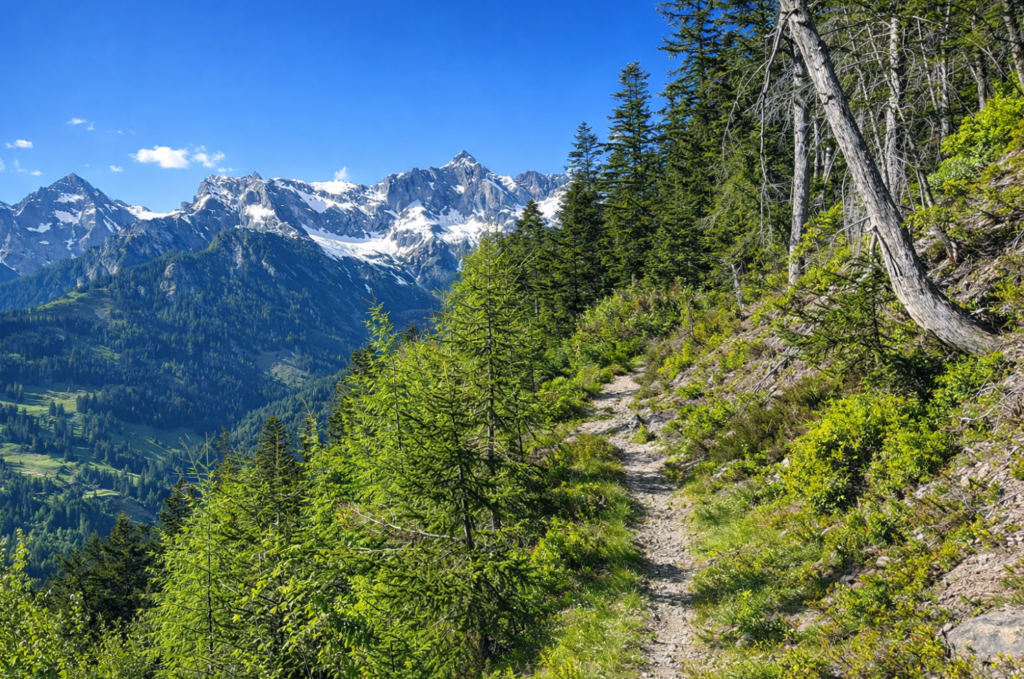
Other Wild Waters of Hohe Tauern
The Gößnitzfall is only one chapter in the story of water here. The Hohe Tauern National Park is alive with gorges and cascades, each with its own personality:
Möllschlucht Via Ferrata: A bold climb through a gorge carved by the Möll river, with rope bridges and 420 metres of steel cable. Medium difficulty (C–D), 0.7 km, 1.5 hours.
Groppenstein & Rabisch Gorges: Known as the “Sinnesschluchten,” these twin gorges form Carinthia’s longest gorge trail. Romantic landslides, waterfalls, and Groppenstein Castle as backdrop. Medium difficulty, 5.5–13 km, 1.5–4.5 hours.
Pirkner Klamm Via Ferrata: A sporty route through deep gorges to the Rainbow Falls, where sunlight almost always conjures a rainbow in the spray. Medium difficulty (C), 2 km, 2.5 hours.Each gorge is a reminder of how water shapes the land — carving, thundering, dazzling with its raw energy.
.
Why Gößnitzfall Stands Out
Though close to Heiligenblut, the Gößnitzfall long remained a hidden gem. Today, with well-marked trails and free parking, it’s accessible yet still feels secretive. The walk is easy, about 30 minutes, with benches for rest and viewpoints that reveal the falls in stages. The final platform delivers the full spectacle: 80 metres of water plunging in a curve northward, framed by forest and rock.
For many, it’s the unexpected highlight of their trip — a waterfall that surprises with its scale, its intimacy, and its sheer force. Unlike more famous falls, Gößnitzfall feels personal: you’re close enough to be drenched, yet far enough to admire its grandeur.
The Spirit of Wild Water
The Hohe Tauern is defined by water. From glaciers melting high above, to streams carving valleys, to waterfalls plunging with unstoppable energy — this landscape is alive with movement. The Gößnitzfall embodies that spirit. It’s not just a destination, but a reminder of the eternal cycle: ice to stream, stream to fall, fall to river.
Standing before the Gößnitzfall, you feel small, humbled, and exhilarated all at once. The mist clings to your skin, the roar fills your ears, and the sight of water surging through stone reminds you of nature’s relentless power. This is more than a hike — it’s a moment of connection with the wild heart of Carinthia.