
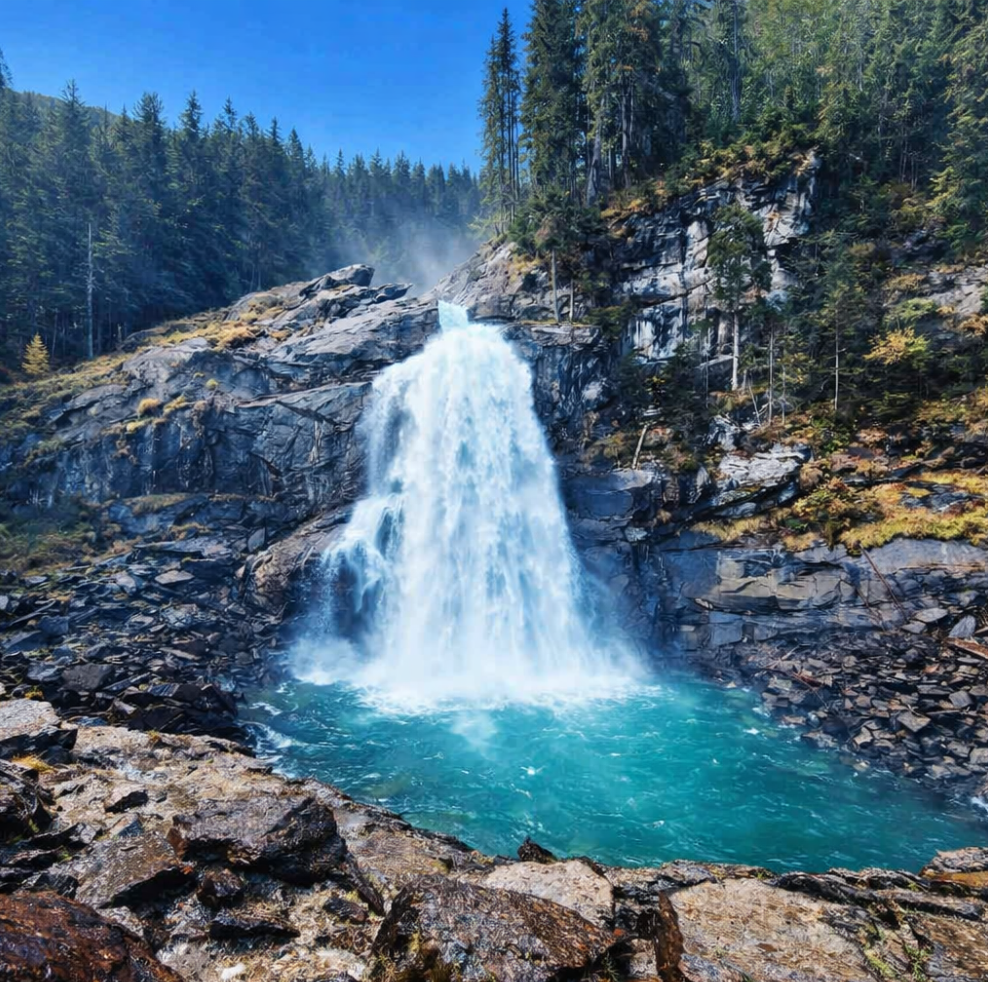
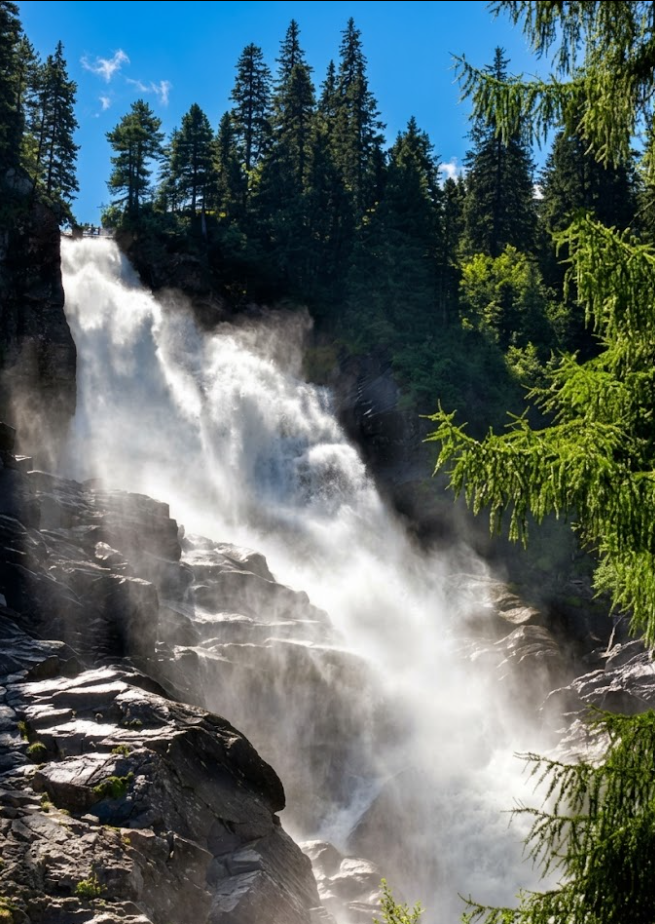
If you’re weaving your way through Austria’s Alps, the Krimml Waterfalls are the kind of place that stops you in your tracks. At 380 metres high, they’re the tallest in Austria and among the most powerful in Europe. The sound alone is unforgettable — a thunderous roar that echoes through the valley, mingling with birdsong and the rustle of alpine pines. Standing here, you don’t just see nature’s force, you feel it reverberate through your chest.
The Trail Experience
Starting Point: Wasserfallweg ticket booth
Distance: 4 km one way to the top lookout
Elevation Gain: 431 m
Time Needed: 1–2 hours up (10–15 minutes to the lower falls)
Difficulty: Moderate — paved, wide, but steep
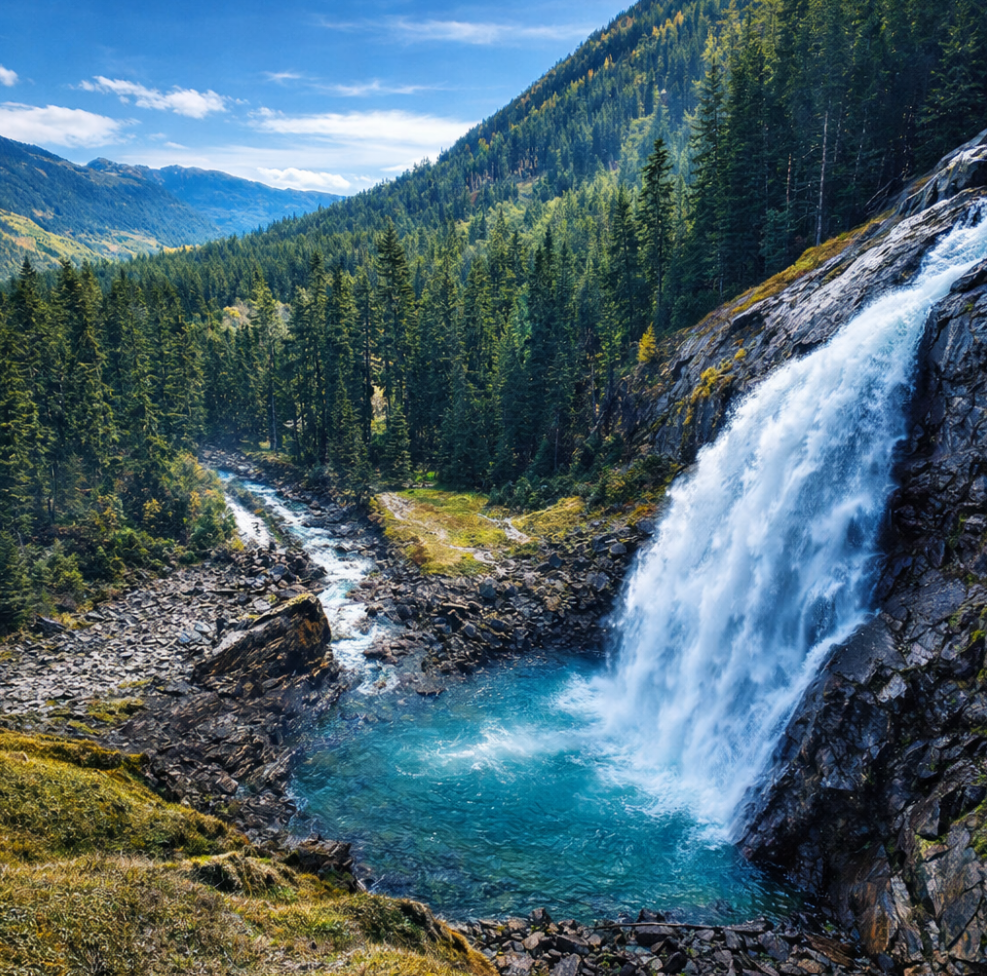
The path is beautifully maintained, zigzagging beside the cascades with viewpoints at every turn. Each lookout offers a fresh perspective: spray catching the sunlight, rainbows arching across the mist, and the valley stretching endlessly behind you. Benches invite you to pause, breathe, and simply take it all in. Halfway up, an alpine restaurant tempts you with hearty food and cold drinks — a welcome break before tackling the final climb.
The ascent feels short but intense, with the steep incline demanding a bit of stamina. Yet the reward at the top — the full sweep of the falls plunging beneath you — makes every step worthwhile. Most hikers turn back here, retracing their route downhill, which is far quicker and easier.
Tickets & Opening Times
Season: Mid‑April to late October
Hours: 09:00–17:00 (last entry 16:30)
Fee: Adults €9.00 | Children (6–15) €4.50
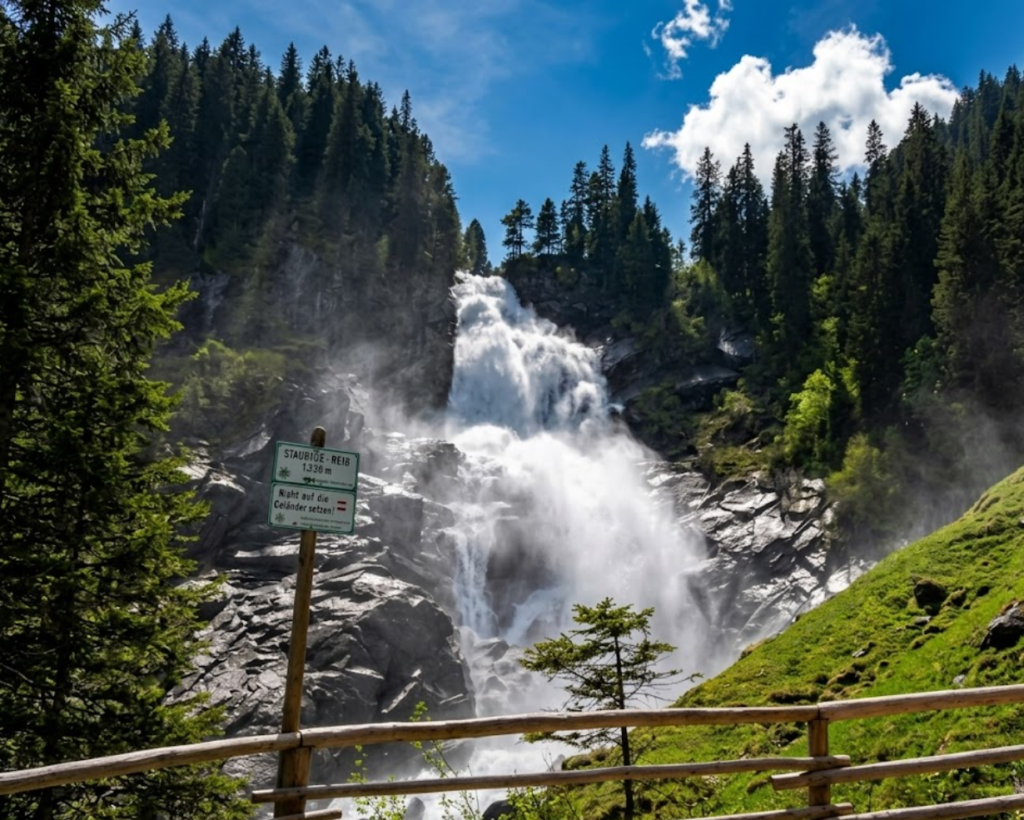
Your ticket supports trail upkeep and conservation, ensuring this fragile alpine ecosystem remains pristine for generations. Outside the main season, only the lower trail is open — free of charge, and quieter, though you miss the drama of the upper cascades.
Parking & Access
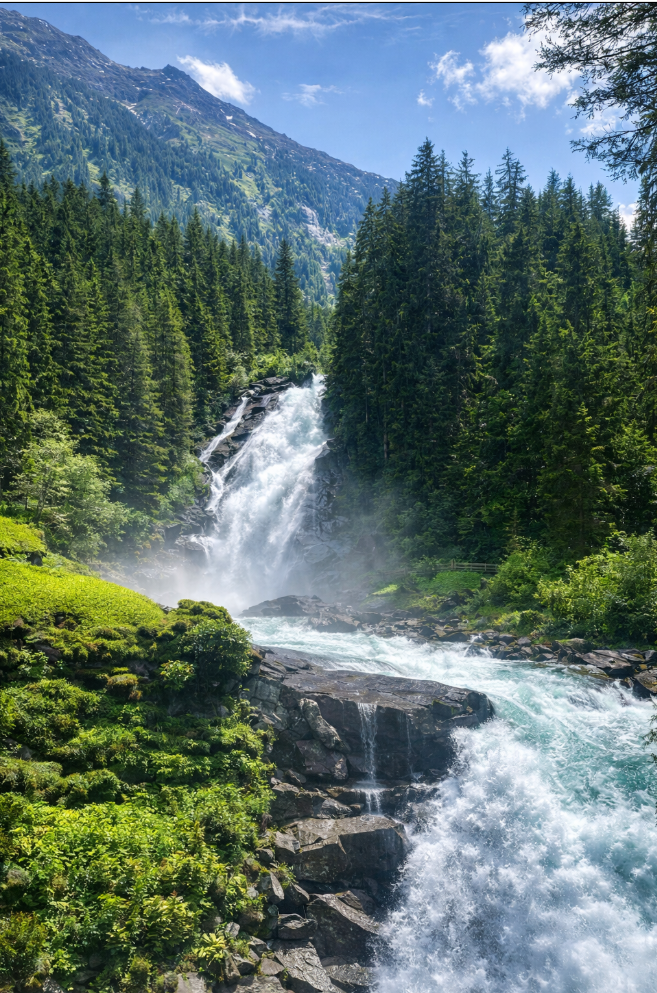
Krimml is a small town built around its waterfalls, with five designated car parks (P1–P5). The closest are P4 and P5, just minutes from the trailhead, while P1–P3 are a short stroll away. Expect around €2 per hour, with the nearer lots slightly pricier. From any lot, the walk to the ticket booth takes you past cafés and souvenir shops — a gentle prelude before the roar of the falls.
Driving Distances
Innsbruck → Krimml: 1 hr 40 min
Salzburg → Krimml: 2 hr 15 min
Munich → Krimml: 2 hr 35 min
The most scenic approach is via the Gerlos Alpine Road, a panoramic drive through the East Alps with sweeping views and a €12 toll. If you’d rather skip the fee, the Krimmler Landesstraße offers an alternative, though its narrow stretches can be nerve‑wracking in larger vehicles.
By Train
Krimml lies at the end of the Pinzgauer local railway, a nostalgic line from Zell am See. The 53 km journey is slow and scenic, winding through alpine meadows and along the Salzach river. It feels like stepping back in time — a charming way to arrive if you’re not in a rush. Zell am See itself is well connected, with trains from Austria, Germany, and Switzerland, plus direct buses from Salzburg Airport.
The Three Stages of the Falls
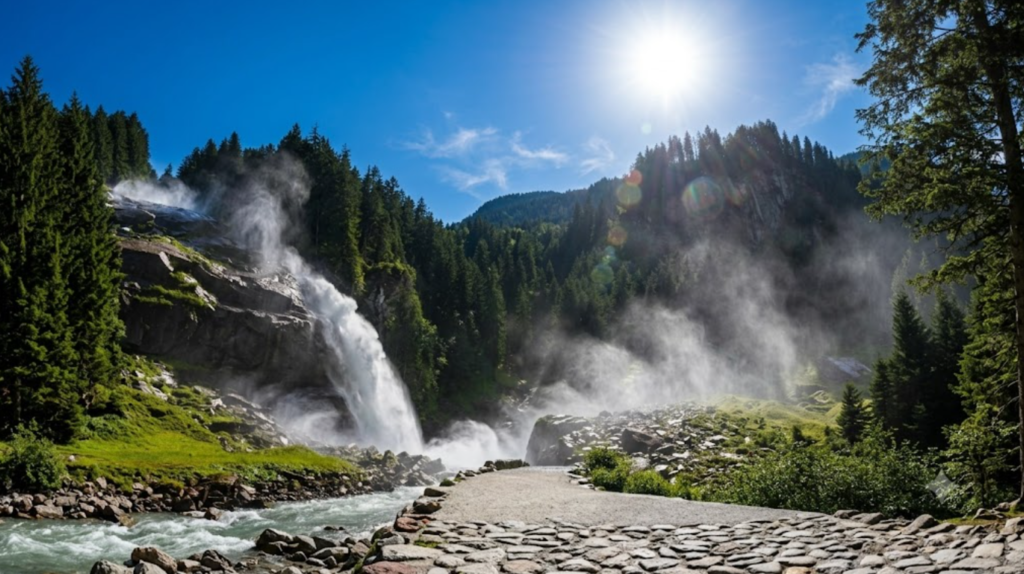
The Krimml Waterfalls tumble in three dramatic stages, each with its own character:
Lower Ache Fall: Just 10 minutes from the entrance, this section is accessible and close enough to feel the spray on your skin. It’s perfect for families, or anyone who wants the thrill without the climb.
Middle Ache Fall: A 30–40 minute zigzagging ascent, steep but manageable, with panoramic viewpoints that beg you to stop and admire. Bergersteig at 1,245 m is a favourite — a balcony over the valley.
Upper Ache Fall: Another 40 minutes higher, where the torrent gathers at 1,460 m before plunging down. The bridge at Schettbrücke offers a dramatic vantage point, with mist swirling and the raw power of water on full display.
Each tier feels like a different world — from the intimacy of the lower falls to the grandeur of the upper heights. Together, they form a half‑day adventure that balances challenge with awe.
Seasonal Flow
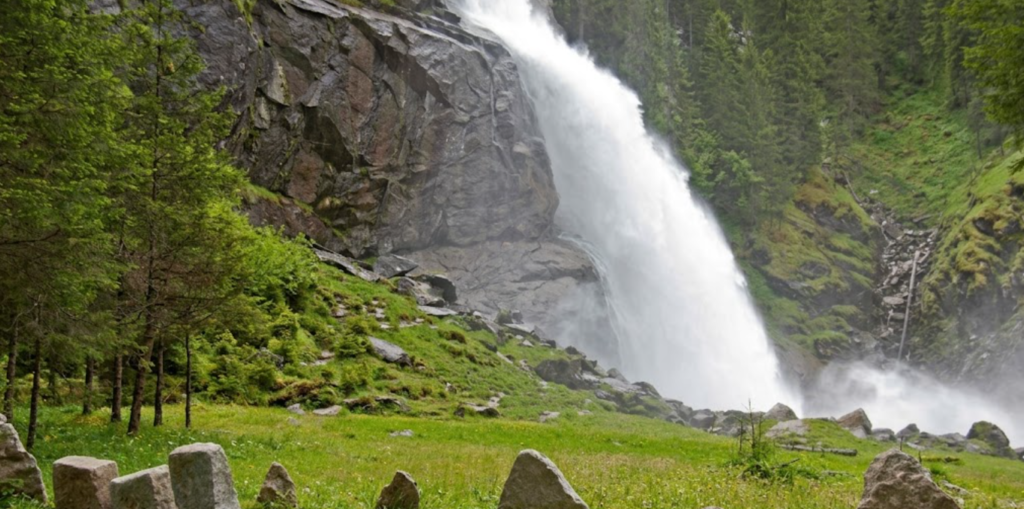
The waterfalls are fed by meltwater from glaciers nearly 20 km away. In summer, the flow surges to 30–40 times its winter volume, averaging 5,600 litres per second — around 176 million cubic metres of water each year. The peak flow comes in the evening, though by then the park is closed, leaving the roar to echo through the valley under the stars.
Krimml isn’t just a stop on your Austrian itinerary — it’s a moment of pure alpine drama. Whether you linger at the lower falls, climb to the top, or arrive by train through meadows and mountains, the experience stays with you. The sound, the spray, the sheer scale — it’s nature at its most theatrical, and it deserves a place on every traveller’s journey through the Alps.